As the dust settles on Ohio’s May 5, 2026, primary election, the stage is set for one of the most consequential gubernatorial contests in the state’s recent history. Biotech entrepreneur and Trump-endorsed Republican Vivek Ramaswamy emerged as the overwhelming GOP nominee, crushing fringe challenger Casey Putsch with approximately 82.5% of the vote (673,902 votes to Putsch’s 143,257). Ramaswamy swept every single county in Ohio, a remarkable show of unity across urban, suburban, and rural areas. On the Democratic side, former Ohio Department of Health Director Dr. Amy Acton secured the nomination unopposed, garnering around 742,000–760,000 votes in a low-energy primary. Overall voter turnout reached about 22.6% of registered voters, a modest uptick from recent midterm cycles.
This matchup pits a dynamic, pro-growth outsider in Ramaswamy—backed by President Donald Trump and positioning Ohio as the nation’s top economic powerhouse—against Acton, whose public profile remains indelibly tied to the state’s aggressive COVID-19 response. As one conservative commentator noted in a recent podcast monologue, the race is far from the neck-and-neck horse race portrayed in some polling and media narratives. While recent surveys show a tight contest (with some giving Acton a slight edge or Ramaswamy a narrow lead), the ground game, Trump’s coattails, independent-voter outreach, and Acton’s historical liabilities suggest that Ramaswamy enters the general election with a structural advantage that could widen significantly by November 3, 2026.
To fully appreciate this contest, we must delve into the candidates’ backgrounds, the primary results and their implications, the lingering economic scars from the pandemic era, comparative policy outcomes in neighboring states, and the broader political currents reshaping Ohio. This analysis expands on grassroots conservative perspectives—while incorporating verifiable data on turnout, economic metrics, investment challenges, and campaign tactics. Far from a replay of “yesteryear” Democrat strategies, this race highlights how progressive governance models have faltered in a post-Trump political landscape.
Candidate Profiles: Contrasting Visions for Ohio’s Future
Vivek Ramaswamy, a Cincinnati native and biotech billionaire, represents a fresh face in Ohio politics despite his national profile from the 2024 Republican presidential primary. Born to Indian immigrant parents, Ramaswamy built a successful pharmaceutical company (Roivant Sciences) before pivoting to public service. His Trump endorsement came early and emphatically, framing him as a “young, strong, and smart” leader committed to meritocracy, deregulation, and economic revival. Ramaswamy’s campaign emphasizes making Ohio the “#1 state” through pro-business policies, workforce upskilling, and attracting high-tech investment in sectors like semiconductors and biotechnology. He campaigns on the “high road,” avoiding personal attacks while highlighting policy contrasts. Critics from the far-right fringes—such as Putsch, dubbed the “car guy” for his automotive-themed online persona—have leveled baseless claims about Ramaswamy’s heritage or loyalty, echoing outdated nativist arguments. Ramaswamy has dismissed these as irrelevant, noting his personal integrity and fair play: his running mate, Ohio Senate President Rob McColley, bolsters legislative experience.
In stark contrast stands Dr. Amy Acton, a physician from Youngstown with a compelling personal story of overcoming hardship in a steel mill family. She rose through public health ranks to become Ohio’s Health Director in 2019 under Republican Gov. Mike DeWine. Acton’s national visibility peaked during the early COVID-19 crisis, when she joined DeWine for daily briefings and advocated strict mitigation measures. These included Ohio’s first-in-the-nation school closures, stay-at-home orders (issued March 22, 2020), business shutdowns, and even the postponement of the state’s presidential primary. Supporters praised her as a calming, data-driven voice who “flattened the curve” and protected hospitals. However, detractors—including many business owners, parents, and conservatives—blame her policies for devastating economic and educational fallout, from mental health crises among youth to prolonged business closures. Acton resigned in June 2020 amid personal threats and protests, later serving briefly as a health advisor before entering the private sector and academia. Her 2026 campaign, with running mate and former Democratic Party chair David Pepper, focuses on “power back to the people,” affordability, and a critique of “billionaires and special interests.” Yet her record remains a focal point of Republican attacks, with Ramaswamy labeling her tenure an “abandonment of responsibility.”
Acton’s campaign has leaned on traditional Democratic infrastructure, including legal support from figures like election attorney Mark Elias, who has been linked to aggressive tactics such as cease-and-desist letters targeting critics. Pepper, a vocal strategist, has served as an attack dog, pushing narratives that question Ramaswamy’s Ohio investment record or allege personal scandals (e.g., unsubstantiated claims of extramarital affairs, which can easily be dismissed as fabrications). These echo “yesteryear” playbook moves but risk backfiring in an era of heightened voter skepticism toward centralized government overreach.
Primary Season: A Landslide for Ramaswamy, Unopposed for Acton
The May 5 primaries crystallized Republican enthusiasm. Ramaswamy’s 82.5% victory margin—far exceeding pre-primary polls showing him at 50-76%—demonstrated broad consolidation. He won 60-90%+ in nearly every county, from Democratic-leaning urban centers to deep-red rural areas, per county-by-county maps. Putsch, representing a self-described “radical right” element with fringe ideas (e.g., racial primacy in voting or extreme nativism), captured only 17.5% and never posed a serious threat. GOP insiders viewed him as illegitimate, akin to past primary spoilers. This sweep signals unified party backing, contrasting with historical GOP infighting (e.g., the 2016 Trump vs. Cruz/Rubio dynamics, in which critics eventually coalesced post-nomination).
Acton’s uncontested path yielded solid but unremarkable Democratic turnout. Overall, the low primary participation (22.6%) underscores that the real battle begins now, targeting the 2-3% of independents and soft partisans who decide the general election. Ramaswamy’s primary dominance positions him to inherit the full Republican machinery, amplified by Trump’s upcoming Ohio appearances.
The Economic Reckoning: COVID Policies, Recovery, and Investment Challenges
Central to the race is Acton’s COVID legacy and its economic toll. Ohio’s early lockdowns contributed to sharp job losses—hundreds of thousands in spring 2020—with uneven recovery. While statewide GDP rebounded (Ohio’s 2023 GDP was around $884 billion, according to BEA data), sectors such as hospitality, retail, and education lagged. Critics argue Acton’s orders exacerbated long-term damage: prolonged school closures harmed student outcomes, and business restrictions drove some enterprises to relocate. Ramaswamy has tied this to Ohio’s failure to recover fully, positioning his administration to reverse it through deregulation and investment incentives.
Ohio’s business climate has improved—ranked No. 7 nationally and No. 1 in the Midwest in the 2026 Chief Executive CEO survey—but faces headwinds. The high-profile Intel semiconductor plant in New Albany (announced in 2022 with up to $20-100 billion promised) exemplifies stalled momentum: construction delays pushed first production from 2025/2026 to 2030-2031, with Intel investing $5+ billion by early 2026 but citing market and financial caution. Opponents blame pandemic-era policies and regulatory uncertainty; supporters note national chip shortages and the federal CHIPS Act. Regardless, such delays highlight the risk of capital flight if Ohio appears unstable.
Comparisons to neighboring states underscore the stakes. Indiana, a right-to-work state since 2012, has often outperformed Ohio in manufacturing retention and unemployment (recently ~3.3% vs. Ohio’s ~4.1-4.2%). Studies on right-to-work show mixed but generally positive effects on job growth in competitive sectors. Michigan (post-right-to-work repeal) and Pennsylvania (swing state with union influence) have seen volatile recoveries, with Michigan’s auto sector still grappling with post-COVID supply chains. Kentucky, under GOP leadership but with its own challenges (e.g., successor dynamics under former Gov. Beshear), attracts some investment but lags in high-tech draws. Ohio, lacking right-to-work status despite past attempts (e.g., failed 2011 SB5), relies on tax incentives and workforce development—but Acton’s era amplified perceptions of anti-business hostility. Post-pandemic GDP growth has been comparable across the region (Ohio ~2.1% in recent years), yet Ohio’s unemployment edged higher in some BLS snapshots, and narratives of a business exodus persist. Ramaswamy’s platform—aligning with a potential Trump administration—promises to lure dollars from Indiana, Michigan, and beyond by emphasizing economic viability over lockdowns.
Unions add another layer. Traditionally Democratic strongholds (teachers, public sector) have shifted toward Trump-era populism on trade and energy. Acton’s ties to labor risk alienating moderates if framed as favoring centralized mandates over job creation. Ramaswamy’s pro-worker, anti-regulation stance could peel independents.
Campaign Tactics, Polling Realities, and Broader Ohio Politics
Recent polls paint a competitive picture—RCP averages near even, with outliers like an early-2026 Emerson showing Acton +1 and Bowling Green/YouGov favoring Ramaswamy slightly. Yet intuition will hold: horse-race media and ad buyers inflate closeness for engagement. Ramaswamy’s primary sweep, Trump rallies, and Acton’s baggage (framed as “COVID queen” by the GOP) suggest momentum. Early attacks—scandals, investment critiques—have already been deployed, leaving Democrats vulnerable to “October surprise” fatigue. Elias-style legal maneuvers and Pepper’s opposition research risk overreach, mirroring past Democratic missteps in red-leaning Ohio.
Ohio’s political map favors Republicans in gubernatorial races—no Democrat has won since 2006. Trump carried the state handily in 2016, 2020, and 2024. Ramaswamy inherits this, plus Senate and House majorities for swift policy wins. Acton represents a “propped-up Biden figure”: big government, unions, and progressive holdouts hoping to stall MAGA momentum. But as unions court Trump and independents prioritize pocketbooks, her path narrows.
Outlook: Boots on the Ground and a Call to Action
The general election will hinge on turnout and independents. Ramaswamy’s personal appeal—honest, non-combative—contrasts with Acton’s defensive posture. As the monologue urges, do not take victory for granted: vote in November, rally behind the nominee. With Trump stumping and economic contrasts sharpening, Ramaswamy could pull away decisively. Ohio’s recovery from pandemic policies, Intel’s fate, and regional competition will define the narrative.
In sum, this race transcends personalities. It tests whether Ohio embraces pro-growth conservatism or reverts to centralized experimentation. Data favors the former; history and momentum reinforce it. As voters weigh track records, Ramaswamy’s vision aligns with a thriving Ohio, while Acton’s invites scrutiny of past costs. The coming months promise clarity—and opportunity, along with a lot of political drama. Amy Acton will have a hard time surviving the intensity that is headed her way.
Footnotes
1. AP projections and primary results, May 2026.
2. Ramaswamy’s victory speech and Acton’s coverage of the criticism.
3. BLS unemployment data (Feb/Mar 2026 snapshots).
4. BEA GDP by state reports.
5. Chief Executive 2026 Best States for Business survey.
6. Ballotpedia and NYT poll aggregates.
(Additional citations drawn from campaign filings, historical COVID orders via Ohio Dept. of Health archives, and economic impact studies.)
Rich Hoffman is an aerospace executive, political strategist, systems thinker, and independent researcher of ancient history, the paranormal, and the Dead Sea Scrolls tradition. His life in high‑stakes manufacturing, high‑level politics, and cross‑functional crisis management gives him a field‑tested understanding of power — both human and unseen.
He has advised candidates, executives, and public leaders, while conducting deep, hands‑on exploration of archaeological and supernatural hotspots across the world.
Hoffman writes with the credibility of a problem-solver, the curiosity of an archaeologist, and the courage of a frontline witness who has gone to very scary places and reported what lurked there. Hoffman has authored books including The Symposium of Justice, The Gunfighter’s Guide to Business, and Tail of the Dragon, often exploring themes of freedom, individual will, and societal structures through a lens influenced by philosophy (e.g., Nietzschean overman concepts) and current events.
The recent decision by the Supreme Court in Louisiana v. Callais, handed down on April 29, 2026, represents a watershed moment in American constitutional law and the long struggle to restore color-blind principles to our electoral system. In a 6-3 ruling, the Court declared Louisiana’s congressional map—specifically Senate Bill 8, which had created a second majority-Black district—an unconstitutional racial gerrymander. Justice Samuel Alito, writing for the majority, made clear that compliance with Section 2 of the Voting Rights Act of 1965 did not justify the state’s predominant use of race in drawing district lines. The map, which stretched across more than 200 miles to link disparate Black communities in a serpentine fashion reminiscent of earlier racial districts struck down decades ago, violated the Equal Protection Clause of the Fourteenth Amendment and the Fifteenth Amendment’s prohibition on racial discrimination in voting. This was not a mere technicality; it was a direct rebuke to the practice of engineering electoral outcomes by segregating voters according to skin color, a tactic we have seen deployed for years under the guise of “protecting minority rights.” The decision affirms what we have long contended: treating citizens differently based on race to create artificial voting blocs does not advance equality—it undermines it.
We must pause here to appreciate the full weight of this ruling. For too long, certain political actors have exploited the Voting Rights Act not as a shield against genuine discrimination but as a sword to carve up the electorate into racial fiefdoms. Louisiana’s 2020 census data showed a roughly 33 percent Black population, yet lower courts had ordered the legislature to draw two majority-Black districts from the state’s six congressional seats, even though the state’s 2022 map already complied with traditional districting principles and partisan considerations. When the legislature complied by drawing SB8 to include a second such district, non-Black voters challenged it as an impermissible racial gerrymander. The Supreme Court agreed, holding that the Voting Rights Act, properly construed, did not require Louisiana to engage in such race-based line-drawing. As Justice Alito explained, Section 2 cannot be read to collide with the Constitution itself; it enforces the Fifteenth Amendment, not overrides equal protection guarantees. This disentangles race from politics in a way that prior cases like Alexander v. South Carolina State Conference of the NAACP had begun to demand, forcing courts and legislatures to prove that race, not partisanship, predominated. The implications ripple far beyond Louisiana’s borders. Maps in states across the nation that relied on similar racial balancing acts now face renewed scrutiny, potentially shifting dozens of seats toward fairer representation based on actual voter preferences rather than engineered demographics.
To understand why this decision has Democrats in such visible distress—melting down in public statements and media commentary as if their very survival depended on it—we have to step back and examine the deeper history of gerrymandering and its evolution into a tool of racial politics. The term itself dates to 1812, when Massachusetts Governor Elbridge Gerry signed a redistricting plan that created a salamander-shaped district designed to favor his Democratic-Republican Party. A Boston newspaper coined the term “gerrymander,” blending Gerry’s name with the creature’s form, and the practice became a bipartisan sin in American politics. Both parties have engaged in partisan gerrymandering over the centuries, drawing oddly contoured districts to pack opponents into fewer seats or to crack their support across many seats. The Supreme Court, in cases like Rucho v. Common Cause (2019), has rightly held that pure partisan gerrymandering claims are nonjusticiable political questions best left to legislatures and voters. Yet racial gerrymandering occupies a different constitutional plane because it triggers strict scrutiny under the Fourteenth and Fifteenth Amendments. When race becomes the predominant factor—subordinating traditional criteria such as compactness, contiguity, and respect for political subdivisions—the state must demonstrate a compelling interest and narrow tailoring. This doctrine traces directly to Shaw v. Reno (1993), where the Court invalidated North Carolina’s bizarre, snakelike majority-Black district drawn to comply with the Voting Rights Act. Justice Sandra Day O’Connor wrote that such plans “reinforce the perception that members of the same racial group…think alike, share the same political interests, and will prefer the same candidates at the polls.” We could not agree more; this racial essentialism treats citizens as members of monolithic groups rather than individuals with diverse views.
The Voting Rights Act of 1965 itself was a triumph of the civil rights movement, dismantling Jim Crow barriers like literacy tests and poll taxes that had disenfranchised Black Americans for a century. Section 2 prohibits any “standard, practice, or procedure” that denies or abridges the right to vote on account of race or color. In Thornburg v. Gingles (1986), the Court established a three-prong test for Section 2 claims: a minority group must be sufficiently large and geographically compact to form a majority in a single-member district; it must be politically cohesive; and the majority must vote sufficiently as a bloc to defeat the minority’s preferred candidate. These were narrow, remedial tools for cases of extreme dilution. Yet over decades, activists and Democratic strategists stretched Section 2 into a mandate for maximizing majority-minority districts wherever possible, often ignoring the Gingles compactness requirement by creating sprawling districts that connected far-flung communities solely by racial data. The 1982 amendments to the Act, passed by Congress amid debates over “results” versus “intent,” further encouraged this by allowing plaintiffs to prevail based on electoral outcomes rather than on proven discriminatory intent. By the 1990s, after the 1990 census, the Department of Justice, under the first Bush administration and later Clinton, aggressively pressured states to draw as many such districts as possible, leading to the very plans that were scrutinized in Shaw. We saw this pattern repeat after every census: 2000, 2010, and especially 2020, when population shifts and court orders forced states like Louisiana, Alabama, and others to redraw lines with race front and center.
Contrast this with the Court’s 2023 decision in Allen v. Milligan, which required Alabama to create a second majority-Black congressional district. There, the majority (including Chief Justice Roberts) upheld a Section 2 claim under Gingles, finding Alabama’s map diluted Black voting strength. Yet even then, the Court cautioned against race predominating unduly. Fast-forward to Louisiana v. Callais in 2026, and the conservative majority has drawn a sharper line: the VRA does not compel race-based remedies that themselves violate equal protection. Justice Alito’s opinion meticulously dissects the record, noting that Louisiana’s initial 2022 map was not proven to violate Section 2 when race and politics were properly disentangled. The state’s later map, drawn explicitly to create the second district, failed strict scrutiny because no compelling interest existed once the VRA obligation was clarified. Dissenters like Justice Elena Kagan warned that this renders Section 2 “all but a dead letter,” but we see it as restoring the Act to its original, limited purpose: preventing intentional discrimination, not mandating proportional racial outcomes. Proportional representation by race has never been the constitutional command; the Fifteenth Amendment guarantees the right to vote free of racial denial, not a right to districts engineered for group success. As Justice Clarence Thomas has long argued in concurrences, race-conscious districting perpetuates the very stereotypes the Constitution abhors.
This brings us to the heart of the matter that has Democrats so alarmed. For years, we have watched as one party systematically used racial profiling in redistricting to manufacture “victimized sectors” of the electorate. By drawing districts that packed minority voters—often urban Black and Hispanic communities—into safe Democratic seats, strategists created the illusion of broad demographic inevitability. The theory was simple: identify groups historically aligned with Democratic policies on welfare, affirmative action, and identity politics; concentrate them to maximize those seats while diluting their influence elsewhere; then portray any challenge as racist. This was not organic coalition-building; it was engineered balkanization. Data from the 2020 census and subsequent analyses showed that without such maps, Republicans would hold significantly more congressional seats nationwide. The same pattern played out in state legislatures and local governments. Urban versus suburban divides, Black versus White, immigrant versus native-born—all were exploited not to heal divisions but to deepen them for electoral gain. We have argued repeatedly that if everyone is treated equally under the law, without regard to skin color, the natural political leanings of the American people—favoring limited government, individual responsibility, and opportunity—would produce Republican majorities far larger than the razor-thin margins we see in national “horse race” polling. Democrats have never been the 50-50 party they claim; their power has always depended on these artificial constructs and, we contend, supplemental mechanisms like extended voting windows, ballot harvesting, and lax identification rules that invite abuse.
Consider the broader pattern of election manipulation that this ruling exposes. We have documented for years how Democrats have benefited from rules that prioritize turnout over integrity. Voter ID requirements, which enjoy overwhelming public support across racial lines in poll after poll, are derided as “suppression” precisely because they make fraud harder. Extended early voting, same-day registration, and no-excuse absentee ballots were sold as accommodations for the “victimized,” yet they create opportunities for chain-of-custody problems and ineligible voting. In 2020 and even into 2024, despite a Republican presidential victory, we saw House and Senate seats flip or held by suspiciously narrow margins in precisely those jurisdictions with the most permissive rules and history of irregularities. States like Pennsylvania, Michigan, Georgia, and Arizona became battlegrounds not because of natural demographic tides but because of procedural advantages Democrats had institutionalized. The Supreme Court’s gerrymandering decision is one piece of a larger corrective: when race-based districting is curtailed, when maps revert to neutral criteria, and when combined with voter ID and same-day voting standards, the playing field levels dramatically. Republicans do not need to “cheat” to win; we need elections that reflect the will of the people without artificial inflation of turnout among low-propensity voters who require constant mobilization through grievance narratives.
The meltdown we observe among Democratic leaders and aligned media is telling. They know, as we have long suspected, that their electoral success has hinged on these mechanisms. Remove the ability to pack districts by race, and suddenly, safe blue seats become competitive. Eliminate the fiction that minority voters must be treated as a bloc, and the coalition fractures along class, values, and policy lines—lines where working-class voters of all backgrounds increasingly gravitate toward Republican messages of economic growth and border security. For decades, Democrats have victimized groups: minorities told they cannot succeed without government largesse, women pitted against traditional family structures, urban cores against suburbs, and even generational divides exploited through student debt forgiveness promises. This was never about equality; it was about dependency and turnout. The color of skin became a proxy for presumed political loyalty, just as the Supreme Court has now ruled impermissible in districting. We see this as a return to first principles: the Constitution is color-blind. As Chief Justice John Roberts famously wrote in Parents Involved in Community Schools v. Seattle School District No. 1 (2007), “The way to stop discrimination based on race is to stop discriminating based on race.” The Louisiana ruling applies that wisdom to the ballot box.
Of course, this victory is not the end of the fight. Gerrymandering litigation will continue, with states now free to prioritize partisan advantage without the VRA as a racial cudgel. Republicans must seize the moment while holding majorities. We have advocated for years that the filibuster, once a tool of minority protection through extended debate, has been weaponized against the will of the majority. With a Republican Senate and House, and a president committed to reform, the time has come to consider nuclear options or carve-outs for election integrity legislation. A simple majority should suffice to pass nationwide voter ID and proof-of-citizenship requirements, same-day voting cutoffs, and chain-of-custody rules for mail ballots. These are not radical; they mirror practices in most democracies and enjoy supermajority support among voters, including majorities of Black and Hispanic Americans in recent surveys. The uni-party elements within Republican ranks—those globalist RINOs who benefit from the status quo—must be challenged from within the movement. True conservatives understand that power must be used aggressively to restore the republic, not conserved in the name of bipartisanship that only one side honors.
The demographic reality further bolsters our case. National polls and voting patterns consistently show that, absent fraud and racial engineering, the electorate tilts Republican. Most Americans, regardless of background, value self-reliance over dependency. Actual election outcomes and shifting attitudes among working-class and minority voters have debunked the “emerging Democratic majority” thesis popularized in the early 2000s. Hispanics, in particular, have trended toward Republicans on issues like immigration and inflation. Black support, while still heavily Democratic, shows cracks among younger men and church-going families. Women are not a monolith; suburban mothers prioritize safety and education over cultural radicalism. By correcting maps to eliminate racial packing, we allow these natural coalitions to form without artificial distortion. Democrats’ “meltdown” stems from the fear that, stripped of their rigged advantages, they cannot compete in a fair fight. History proves the point: when elections are clean—as in many red states with strict ID laws—Republican performance exceeds expectations. The 2024 presidential result, where Donald Trump secured victory despite headwinds, would have been even more decisive without the lingering procedural vulnerabilities in key states.
We must also confront the philosophical rot at the core of the opposition. Identity politics, rooted in Marxist class struggle rebranded as racial grievance, teaches that society is a zero-sum battle of oppressors and the oppressed. Democrats have mastered this, victimizing groups to harvest votes while promising free stuff—reparations rhetoric, affirmative action, welfare expansion—in exchange for loyalty. This is not empowerment; it is patronage. The Supreme Court’s ruling strikes at the foundation by saying the state cannot use skin color to segregate voters into blocs. It echoes the color-blind vision of civil rights pioneers like Frederick Douglass and Martin Luther King Jr., who dreamed of a nation that judges citizens by character, not race. Modern “progressives” have abandoned that dream in favor of power. We reject it outright. A free society treats individuals equally; anything else breeds resentment and division.
Looking forward, the path is clear. Republicans must act with the same urgency Democrats have shown in pursuing their agenda. Pass election reform now, while the moment allows. Enforce the Louisiana precedent nationwide through Department of Justice guidance or legislation. Challenge remaining suspect maps aggressively. And purge the party of those dragging their feet in the name of “institutional norms.” The filibuster, if it blocks basic integrity measures, should yield to the majority’s mandate. We are not seeking one-party rule; we seek a representative republic where votes count, and outcomes reflect the people’s will. Democrats have never commanded a true national majority without these crutches; their 50-50 self-image is a myth sustained by fraud, gerrymandering, and demographic manipulation. Remove the crutches, and the illusion collapses.
In the end, the Louisiana v. Callais decision is cause for celebration, not just for Republicans but for all Americans tired of race-obsessed politics. It restores integrity to the franchise and dignity to every citizen by refusing to reduce them to racial statistics on a map. We have waited decades for this correction. Now is the time to build on it—voter ID, secure elections, neutral maps, and a return to the constitutional promise of equal treatment. The Democrats’ power was always borrowed from these distortions; its return to baseline is long overdue. The American people deserve nothing less than a system where every vote counts equally, every district reflects the community, and no one is profiled by skin color. This ruling is the first major step in that restoration, and we must follow through with resolve. The republic hangs in the balance, and the people—united, not divided—will prevail.
Footnotes
¹ Louisiana v. Callais, 608 U.S. ___ (2026) (slip op. at 1-2, Alito, J.).
² SCOTUSblog, “In major Voting Rights Act case, Supreme Court strikes down redistricting map challenged as racially discriminatory” (Apr. 29, 2026).
³ NPR, “The U.S. Supreme Court strikes another severe blow to the Voting Rights Act” (Apr. 29, 2026).
⁴ Associated Press, “Supreme Court weakens the Voting Rights Act and aids Republicans” (Apr. 29, 2026).
⁵ See Shaw v. Reno, 509 U.S. 630 (1993).
⁶ Thornburg v. Gingles, 478 U.S. 30 (1986).
⁷ Allen v. Milligan, 599 U.S. 1 (2023).
⁸ Wikipedia entry and SCOTUS opinion summary for Louisiana v. Callais.
⁹ PBS NewsHour analysis (May 2026) on nationwide implications.
Bibliography
• Alito, Samuel. Opinion in Louisiana v. Callais, 608 U.S. ___ (2026). Supreme Court of the United States.
• Amy Howe, “In major Voting Rights Act case, Supreme Court strikes down redistricting map,” SCOTUSblog (Apr. 29, 2026).
• “The U.S. Supreme Court strikes another severe blow to the Voting Rights Act,” NPR (Apr. 29, 2026).
• “Supreme Court weakens the Voting Rights Act and aids Republicans,” Associated Press (Apr. 29, 2026).
• Shaw v. Reno, 509 U.S. 630 (1993).
• Miller v. Johnson, 515 U.S. 900 (1995).
• Allen v. Milligan, 599 U.S. 1 (2023).
• Rucho v. Common Cause, 588 U.S. 684 (2019).
• Voting Rights Act of 1965, 52 U.S.C. § 10301 et seq.
• Abigail Thernstrom, Whose Votes Count? Affirmative Action and Minority Voting Rights (Harvard University Press, 1987).
• J. Christian Adams, Injustice: Exposing the Racial Agenda of the Obama Justice Department (Regnery, 2011).
• Hans von Spakovsky, The Election Fraud Handbook (Heritage Foundation, various reports 2020-2025).
• Shelby County v. Holder, 570 U.S. 529 (2013).
• Frederick Douglass, Narrative of the Life of Frederick Douglass (1845) and speeches on color-blind justice.
• Martin Luther King Jr., “I Have a Dream” (1963).
Rich Hoffman is an aerospace executive, political strategist, systems thinker, and independent researcher of ancient history, the paranormal, and the Dead Sea Scrolls tradition. His life in high‑stakes manufacturing, high‑level politics, and cross‑functional crisis management gives him a field‑tested understanding of power — both human and unseen.
He has advised candidates, executives, and public leaders, while conducting deep, hands‑on exploration of archaeological and supernatural hotspots across the world.
Hoffman writes with the credibility of a problem-solver, the curiosity of an archaeologist, and the courage of a frontline witness who has gone to very scary places and reported what lurked there. Hoffman has authored books including The Symposium of Justice, The Gunfighter’s Guide to Business, and Tail of the Dragon, often exploring themes of freedom, individual will, and societal structures through a lens influenced by philosophy (e.g., Nietzschean overman concepts) and current events.
Michael Ryan’s decisive victory in the 2026 Butler County Republican primary for commissioner marks a significant shift in local politics, reflecting voter demand for genuine conservatism, accountability, and fresh leadership. I have followed these races closely for years, and this outcome stands out as a clear repudiation of entitlement politics and a triumph for the kind of candidate who earns support through hard work and integrity. With final unofficial results showing Ryan capturing approximately 72% of the vote to Cindy Carpenter’s 28%, the primary essentially decides the seat in this heavily Republican county.
Butler County, Ohio, is in the southwestern part of the state, encompassing communities such as Hamilton, Middletown, Fairfield, and Oxford (home to Miami University), as well as numerous townships. Its population exceeds 390,000, with a strong manufacturing and agricultural base alongside growing suburban development. The Board of Commissioners oversees a substantial budget, infrastructure projects, economic development, public safety, and human services. For decades, the board has operated under Republican dominance, making the GOP primary the real contest. Winning it virtually guarantees victory in November against the unopposed Democrat Mike Miller.
Cindy Carpenter had served as commissioner since 2011 and was seeking a fifth term. Her tenure focused on human services, public health, and fiscal matters, but it was marred by controversies that alienated many in the party base. Incidents included a heated confrontation at a Miami University-area apartment complex involving her granddaughter, where she was accused of leveraging her position, using inappropriate language, and displaying aggressive behavior captured on video. Investigations cleared her of criminal wrongdoing but highlighted conduct deemed “distasteful” and “beneath her elected position.” Additional complaints arose, including allegations of aggressive conduct at a housing coalition meeting. Even the county sheriff publicly expressed concerns about her behavior.
A particularly damaging episode involved Carpenter campaigning for a Democrat in the Middletown mayoral race, crossing party lines in ways that many viewed as disloyal. This move, combined with her decision not to seek the Butler County Republican Party endorsement, signaled a disconnect. She appeared to operate with an entitled mindset, assuming incumbency alone would carry her through. Her campaign signs, some in blue tones reminiscent of Democratic aesthetics, and limited fundraising—only about $7,700 compared to Ryan’s over $46,000—underscored a lack of broad support.
In contrast, Michael Ryan entered the race as a former Hamilton City Council member with a background in business and community service. He positioned himself as a true conservative caretaker focused on fiscal responsibility, job creation, lower taxes, and practical governance. Ryan methodically built support: he secured the Republican Party endorsement with a striking 71% in the first round of voting, an early and historic show of strength. Major figures lined up behind him, including Auditor Nancy Nix, who endorsed him at a fundraiser when it still carried risk; Congressman Warren Davidson; State Representative Thomas Hall; and others, such as George Lang. These endorsements validated his approach and reassured voters that change could be safe and effective.
I endorsed Ryan early, well before the primary heated up. Having known him for years, I saw in him the sincerity and dedication often missing in politics. He raised money effectively, attended events tirelessly, engaged voters across the county, and maintained a positive, bridge-building demeanor even amid challenges like sign theft. His campaign emphasized family values, economic growth, and responsiveness—qualities that resonated deeply in a county frustrated with the status quo. The watch party on primary night, held at the Premier Shooting facility with a speakeasy-style back area, overflowed with supporters. The room was packed; people had to turn sideways to navigate. Energy filled the space as results rolled in.
Congressman Warren Davidson attended and shared insights from his experience in large districts. We discussed the political savvy required at every level and how Ryan had grown into a polished figure capable of uniting people. Davidson’s presence underscored the race’s importance, and his admiration for Ryan’s development over the couple of years spoke volumes. Other supporters like Darbi Boddy added to the festive, optimistic atmosphere. It felt like a genuine celebration of earned success rather than entitlement.
The results confirmed what grassroots momentum had suggested. With 100% of precincts reporting in unofficial tallies, Ryan’s 72%-28% margin was overwhelming and, for some, embarrassing to the incumbent. Early voting and election-day observations showed Carpenter’s team attempting a last-minute sign blitz, but it failed against organized, enthusiastic Ryan volunteers who kept their ground game strong. The Republican slate card proved crucial, as it often does; voters seeking vetted candidates found Ryan prominently featured through party processes and independent media coverage.
This victory carries broader lessons for politics, especially local races. Party systems matter because they help aggregate preferences in a diverse society. People differ on countless details—concrete versus asphalt, tax priorities, development approaches—but effective governance requires building majorities. Dismissing the party as irrelevant or operating as a “RINO” critic while undermining it rarely succeeds. Ryan demonstrated the opposite: he worked within the system, earned endorsements through respect and effort, and presented a positive vision.
Background on Butler County’s political landscape adds context. The county has long leaned conservative, supporting Republican candidates at high levels, including strong support for Trump in recent cycles. Yet local frustrations with taxes, growth management, infrastructure, and perceived insider politics have grown. Projects involving economic development, public safety, and services will benefit from new energy. Ryan has signaled readiness to hit the ground running, with ideas on efficiency, accountability, and forward-thinking initiatives already in motion during the campaign. His experience on Hamilton council involved practical decision-making on budgets and community issues, preparing him well for county-level responsibilities.
Roger Reynolds, former county auditor, briefly entered the race but withdrew after the party endorsement went decisively to Ryan. His last-minute alignment with Carpenter, including sign placement, highlighted lingering personal grievances but ultimately underscored the party’s unified shift. Voters rejected that approach. In an era where authenticity matters more than ever, Ryan’s consistent message and character won out.
I am proud to have supported him from the beginning. When Nancy Nix announced her endorsement at a fundraiser, it took courage because challengers to incumbents often face skepticism. Yet as momentum built—through articles, videos, conversations, and events—support snowballed. Thousands accessed information in the final days, researching Ryan’s record and deciding he represented the change they sought without chaos.
Looking ahead to the general election in November 2026, the focus shifts to implementation. Ryan will face minimal opposition, allowing emphasis on transition planning. Priorities likely include continuing fiscal stewardship amid state and federal shifts, addressing housing and development thoughtfully, enhancing public safety, and promoting economic opportunities in a region balancing rural roots with suburban expansion. His fresh perspective promises to inject optimism and results-oriented governance.
Politics at the county level profoundly affects daily life: road maintenance, emergency services, property taxes, zoning, and more. When voters sense entitlement or disconnection, they respond, as seen here. Carpenter’s campaign assumed voter inertia; Ryan proved engagement and sincerity prevail. This race reminds us that traditional political games—relying on name recognition, minimal effort, or media insiders—have diminished effectiveness in an era of an informed electorate.
The night of the primary embodied hope. A full room of dedicated Republicans, conversations with leaders like Davidson, and the visible relief and excitement on supporters’ faces painted a picture of renewal. Ryan’s wife and family shared in the moment, grounding the victory in personal commitment. For those involved in politics, the takeaway is clear: do the work, be genuine, build coalitions, and respect the process. Ryan exemplified this, turning potential obstacles into advantages.
As someone who values conservative principles of limited government, individual responsibility, and community strength, I see Ryan’s win as validation. Butler County deserves leadership that listens, acts prudently, and prioritizes residents. With the primary behind us, anticipation builds for his term starting in 2027. Many good projects and ideas wait in the wings, ready for execution. And because of this election, a lot of good things will happen.
Footnotes
1. Journal-News reporting on final unofficial results showing Ryan at 72%.
2. Cincinnati Enquirer coverage of fundraising disparity and endorsements.
3. Ballotpedia profiles on candidates and race background.
4. Accounts of Carpenter controversies from multiple local news outlets.
5. Party endorsement details and 71% vote.
6. Observations from the watch party and interactions with Davidson.
Bibliography / Further Reading
• Journal-News (Hamilton, Ohio): Multiple articles on the primary, results, and candidate profiles (2026).
• Cincinnati Enquirer: Coverage of the commissioner race, fundraising, and controversies.
• Ballotpedia: Entries for Michael V. Ryan, Cindy Carpenter, and Butler County elections 2026.
• Ryan for Butler official campaign site: Policy positions and updates.
• Butler County Board of Elections: Official results and candidate filings.
• articles on local politics and endorsements.
• Additional context from county commissioner office descriptions and historical election data.
This primary will be remembered as a turning point in which voters chose character, preparation, and vision over incumbency. Michael Ryan earned this victory, and Butler County stands to benefit. The hard work of the campaign now transitions to governance, with high expectations and strong support. It is a positive development for the future.
Rich Hoffman is an aerospace executive, political strategist, systems thinker, and independent researcher of ancient history, the paranormal, and the Dead Sea Scrolls tradition. His life in high‑stakes manufacturing, high‑level politics, and cross‑functional crisis management gives him a field‑tested understanding of power — both human and unseen.
He has advised candidates, executives, and public leaders, while conducting deep, hands‑on exploration of archaeological and supernatural hotspots across the world.
Hoffman writes with the credibility of a problem-solver, the curiosity of an archaeologist, and the courage of a frontline witness who has gone to very scary places and reported what lurked there. Hoffman has authored books including The Symposium of Justice, The Gunfighter’s Guide to Business, and Tail of the Dragon, often exploring themes of freedom, individual will, and societal structures through a lens influenced by philosophy (e.g., Nietzschean overman concepts) and current events.
I have long maintained that Fox News performs better when Donald Trump occupies the White House, and recent events have only reinforced that view. The network’s success has never hinged on any single personality but on delivering timely, relevant content to working Americans who tune in after a long day. Yet the story of Tucker Carlson’s rise, departure, and subsequent evolution reveals deeper truths about media power, celebrity egos, and the limits of influence in American politics. As someone who has observed these dynamics closely from Ohio, I have always believed that media tycoons like Rupert Murdoch crave control over the executive branch—and when they cannot exert it, they push back. Trump proved uncontrollable, leading to internal shifts at Fox, including the ousting of Carlson. What followed was a tale of inflated celebrity status untethered from corporate structure, celebrity endorsements during the 2024 campaign, and now, in year two of the Trump administration, profound regret over foreign policy, particularly the Israel-Iran conflict.
To understand this fully, we must start with a background on Fox News itself. Launched in 1996 by Rupert Murdoch and Roger Ailes, Fox News Channel revolutionized cable news by targeting an underserved audience: conservative viewers seeking alternatives to what they perceived as liberal bias in mainstream networks. Bill O’Reilly’s The O’Reilly Factor, which debuted in 1996 and dominated the 8 p.m. slot for decades, epitomized this model. O’Reilly drew massive audiences—often exceeding three million viewers nightly—by blending straight reporting with opinionated commentary that resonated with working-class Republicans who returned home from jobs around 6 or 7 p.m., ate dinner, and wanted a digest of the day’s events. His show was not just entertainment; it was appointment viewing for an audience that worked hard during the day and valued straightforward analysis without the corporate polish of other networks.
I always respected O’Reilly’s style, even if I did not agree with every nuance. When Tucker Carlson assumed the 8 p.m. slot in 2017 following O’Reilly’s departure amid sexual harassment allegations, many wondered if the audience would follow. Carlson had been a frequent contributor to The O’Reilly Factor, bringing a sharper, more polemical edge honed from his time at CNN and MSNBC. His show quickly captured the same demographic, maintaining strong ratings—averaging around 3.2 million viewers in early 2023—by focusing on cultural issues, immigration, and skepticism of establishment narratives. Jesse Watters, who later inherited the slot, has done a solid job continuing that tradition, often drawing competitive numbers, though initial post-Carlson viewership dipped slightly as loyalists adjusted. The point remains: Fox’s success stemmed from understanding its audience’s schedule and delivering content they craved at the precise hour they could consume it, not from any individual star’s charisma alone.
Rupert Murdoch, the media mogul often misspoken as “Myrtle” in casual conversation but known to all as the force behind News Corp and Fox, has had a complex, transactional relationship with Donald Trump that has spanned decades. Back in the 1970s and 1980s, as Murdoch built his American empire with the New York Post, Trump was a brash New York real estate developer who fed scoops to the tabloid’s Page Six. Their alliance was mutually beneficial: Trump gained publicity, Murdoch gained insider access. Yet tensions arose when Trump ran for president in 2015-2016. Murdoch initially viewed him skeptically as a “phony” and publicly criticized his immigration stance. Once Trump won, however, the relationship deepened; they spoke frequently, and Fox became a platform amplifying Trump’s message. Still, Murdoch’s empire has always prioritized control. When Trump proved resistant to influence—particularly during his first term and after the 2020 election—frictions emerged. Murdoch reportedly wanted Trump sidelined as a “nonperson” after January 6, 2021, and backed alternatives like Ron DeSantis in the 2024 primaries. The Murdoch family’s discomfort with uncontrollable figures like Trump led to strategic moves at the network.
Carlson’s departure from Fox in April 2023 exemplified this dynamic. Officially announced as a mutual parting, the reality involved deeper issues tied to the Dominion Voting Systems lawsuit, in which Fox settled for $787.5 million over 2020 election coverage. Internal texts revealed Carlson’s private frustrations and inflammatory language, alienating executives. Critics inside Fox described him as having grown “too big for his boots,” with racially charged comments and misogynistic undertones surfacing in discovery. Murdoch himself reportedly ordered the firing, viewing Carlson’s toxicity as a liability amid mounting legal and reputational risks. I always thought Carlson did a decent job as a reporter—grounded enough to challenge narratives effectively—but he was never as consistently anchored as O’Reilly. His style appealed to the same audience, yet the corporate structure eventually constrained him.
Once freed from Fox, Carlson found a massive platform on X (formerly Twitter), bolstered by support from Elon Musk and others. Celebrity status untethered from corporate oversight can be intoxicating. I have observed this pattern repeatedly: individuals discover fame independent of the old guard, and their heads swell. Carlson’s post-Fox trajectory followed this path. He campaigned vigorously for Trump in 2024, headlining events, interviewing the candidate, and even influencing discussions about the VP selection, including J.D. Vance. Many Democrats and independents joined the “Trump bandwagon” too—Joe Rogan, Alex Jones, and others—uniting behind a shared vision. I was invited to several VIP package events in Ohio where Carlson was set to headline during the election cycle. These were high-profile gatherings with figures like Bernie Moreno and J.D. Vance, promising networking and insight. As someone deeply involved in Ohio politics and conservative circles, I enjoy such environments. Yet I declined. My calendar was full, but more importantly, I sensed something off with Carlson—a growing ego, a detachment from the grassroots he once claimed to represent. I had a feeling this might eventually reveal itself, and it has.
In the 2024 election, Trump secured victory with approximately 73.5 million popular votes and 312 electoral votes, compared with Kamala Harris’s roughly 69 million popular votes. Turnout was solid but lower than 2020 in many areas, with Trump maintaining or slightly improving margins in key demographics. Claims of widespread fraud persisted on both sides post-election, echoing 2020 debates, but the results held under scrutiny in states with voter ID requirements and robust audits. I have long argued that election integrity matters profoundly; where voter ID is absent, or mail-in processes lack safeguards, problems arise—as seen in 2020. Yet the core truth is this: Trump did not win because of celebrity endorsements. Tucker Carlson, Elon Musk, Joe Rogan, or any podcaster did not deliver the one or two percentage points that carried him across the finish line. Voters did. Trump positioned himself as their representative—listening, adapting, and embodying frustrations with the status quo. Without any of those high-profile backers, the numbers would not have changed meaningfully. People vote for whoever they believe represents them, not for whoever a media figure tells them to support.
This brings us to the present, year two of the second Trump administration. Carlson has fallen dramatically out of alignment with the Trump agenda, particularly over U.S. involvement in the Israel-Iran conflict. He has publicly expressed regret for campaigning for Trump, apologizing on his podcast for “misleading people” and admitting he will be “tormented” by his role. He has accused Trump of becoming a “slave” to Israel, claiming external pressures from donors and influencers pushed the administration into war despite America First promises. Carlson argues the conflict serves Israeli interests over American ones, a stance that has alienated him from many former supporters. I find this preposterous and ego-driven. No single commentator, no matter how influential on X or in podcasts, possesses the power to “make” a president or dictate foreign policy outcomes. Carlson never had that kind of sway at Fox, nor does he now. His regret stems from a fantasy that his endorsement was pivotal—when, in reality, it was the voters who chose Trump as their representative.
I have seen this celebrity bubble up close. During the campaign, many high-profile figures climbed aboard the Trump train after initial skepticism. Musk poured resources and personal endorsement into the effort; Rogan hosted landmark interviews. It was a unifying moment for the right and some disaffected left-leaning voices. Yet as I have written in my own work, including The Gunfighter’s Guide to Business, true leadership and strategy come from understanding systems, not inflating personal myths. Trump adapted to the people’s will—he listened to their concerns on the economy, borders, and cultural erosion. If elections were held again today under fair conditions (no Covid-era irregularities, full voter ID enforcement), the outcome would likely mirror 2024. Democrats traded Biden for Harris, knowing the 2020 fraud playbook could not be replicated without backlash. People ultimately vote for their representative, not the podcast host’s narrative.
The hard lesson for Carlson—and anyone tempted by similar hubris—is that loyalty to the movement and its representative endures. Trump voters are not abandoning him over foreign policy disagreements; they see the bigger picture of domestic priorities. Fox News knew this audience intimately: Republicans who clock in early, work hard, and catch news at 8 p.m. after dinner and a shower. The network thrived by reliably filling that slot, whether with O’Reilly, Carlson, or now Watters. When Fox pushed Carlson amid tensions with Trump and the Murdoch family’s unease, a segment of the audience followed him to X, but that loyalty fractured when he turned against the agenda voters had endorsed. Rebels who break from the core movement find themselves on the outside looking in.
This is not unique to Carlson. Media personalities often overestimate their role. I did not attend those Ohio events, not out of disdain but intuition: something in Carlson’s independence felt unmoored, destined to clash with the representative nature of Trump’s coalition. I have met Vance, Moreno, and others in collaborative settings focused on political tasks, and those environments succeed because they prioritize the people’s will over individual egos. Tucker’s current path—anti-Trump rhetoric on Iran—illustrates the peril of believing one “made” the president. It is preposterous, ego-driven, and disconnected from electoral reality.
In the end, the true essence of politics lies in representation. Trump offered himself as that vessel, adapting to voters’ intentions without needing celebrity validation. Media figures report what busy Americans lack time to discover; they do not create presidents. Celebrities like Carlson, Musk, or Rogan provided support and enjoyed the ride, but Trump’s victories—past and future—stem from the courage of ordinary voters rejecting the status quo. Election fraud debates aside, when the system functions with integrity, the people’s choice prevails.
The Murdoch family’s Trump skepticism, Carlson’s bubble, and the 2024 bandwagon all underscore one fact: no media tycoon or podcaster controls the executive branch. Voters do. And that will remain the case.
Footnotes
¹ Rupert Murdoch and Donald Trump’s relationship has been documented extensively as transactional yet fraught; see sources below.
² Tucker Carlson’s firing and internal dynamics are detailed in contemporaneous reporting.
³ Viewership data from Nielsen via industry analyses.
⁴ 2024 election tallies from Associated Press and state certifications.
⁵ Carlson’s 2026 statements on Iran from interviews and podcasts.
Bibliography
• “The Intertwined Legacies of Rupert Murdoch and Donald Trump.” The New Yorker, September 12, 2025.
• “Tucker Carlson’s Ugly Exit From Fox News.” Vanity Fair, October 31, 2023.
• “Tucker Carlson Fired by Fox News.” The Guardian, October 31, 2023.
• “Tucker Carlson Apologizes for Backing Trump.” KOMO News, April 21, 2026.
• “Tucker Carlson Says He Is ‘Tormented’ by His Past Support.” The New York Times, April 21, 2026.
• “Jesse Watters Ratings Compared to Tucker Carlson.” Newsweek, July 19, 2023.
• 2024 U.S. Election Results. Associated Press, November 2024.
• Hoffman, Rich. The Gunfighter’s Guide to Business.
• Additional reporting from NPR, BBC, and Fox News internal analyses on ratings and programming.
Rich Hoffman is an aerospace executive, political strategist, systems thinker, and independent researcher of ancient history, the paranormal, and the Dead Sea Scrolls tradition. His life in high‑stakes manufacturing, high‑level politics, and cross‑functional crisis management gives him a field‑tested understanding of power — both human and unseen.
He has advised candidates, executives, and public leaders, while conducting deep, hands‑on exploration of archaeological and supernatural hotspots across the world.
Hoffman writes with the credibility of a problem-solver, the curiosity of an archaeologist, and the courage of a frontline witness who has gone to very scary places and reported what lurked there. Hoffman has authored books including The Symposium of Justice, The Gunfighter’s Guide to Business, and Tail of the Dragon, often exploring themes of freedom, individual will, and societal structures through a lens influenced by philosophy (e.g., Nietzschean overman concepts) and current events.
I have been saying for years that the vertical air taxi market—powered by electric vertical takeoff and landing (eVTOL) aircraft—would quite literally take off, and that by the end of 2026 it would become commonplace in major cities and airports across the country. Leading up to 2025 and into 2026, I told everyone who would listen that Joby Aviation was positioned to lead this transformation, turning what many dismissed as science fiction into everyday reality. And right on cue, at the end of April 2026—specifically during demonstrations from April 25 through April 27 and extending into the following days—Joby completed New York City’s first-ever point-to-point eVTOL air taxi flights, soaring from John F. Kennedy International Airport (JFK) to Manhattan heliports in under 10 minutes (some reports clocked segments at just seven minutes). This wasn’t just a flashy stunt; it was a critical FAA milestone under the eVTOL Integration Pilot Program (eIPP), showcasing seamless integration into one of the world’s busiest and most tightly regulated airspaces. The flights validated everything I had predicted: quiet, emissions-free, stable vertical flight that outperforms noisy traditional helicopters, all while promising to slash travel times and transform how we move in and out of urban centers.
To understand why this moment feels so validating, it helps to step back and consider the substantial background of the eVTOL industry and Joby Aviation specifically. eVTOL technology represents the convergence of electric propulsion, advanced batteries, distributed electric propulsion (multiple rotors for redundancy and safety), and fly-by-wire controls—essentially combining the vertical agility of a helicopter with the efficiency and quiet operation of a fixed-wing aircraft. Unlike traditional helicopters, which rely on loud combustion engines and single rotors, Joby’s S4 aircraft uses 12 electric propellers (six tilting for forward flight, six dedicated for lift) powered by high-energy-density batteries. This design delivers near-silent operation—reportedly 100 times quieter than helicopters during takeoff and landing in some metrics —with cruise noise levels around 45 dB at altitude, quieter than normal conversation. It uses no jet fuel, produces zero tailpipe emissions, and offers far greater stability in flight. The aircraft carries a pilot and up to four passengers, making it ideal for premium, on-demand service akin to Uber Black but in the sky.
Joby Aviation, founded in 2009 and headquartered in Santa Cruz, California, has spent more than a decade refining this vision. Backed by heavyweights like Toyota (a manufacturing partner providing automotive-grade expertise and capital), Delta Air Lines, and Uber, the company has methodically progressed through FAA certification stages. By early 2026, Joby had flown its first FAA-conforming aircraft (March 11), entered the final Type Inspection Authorization phase, and cleared Stage 4 of the five-stage certification process. The April 2026 Manhattan demonstrations—part of a week-long campaign using existing heliports such as Downtown Skyport, West 30th Street, and East 34th Street—were not passenger-carrying commercial flights but rather critical proof-of-concept operations. They demonstrated point-to-point integration with FAA-controlled airspace at one of America’s busiest airports, building on New York’s selection as part of the White House-backed eIPP announced in March 2026. Joby was named a partner on five projects spanning 12 states, accelerating the path to commercial rollout. These flights weren’t isolated; Joby has conducted similar demos globally, but Manhattan’s dense urban environment was the ultimate credibility check.
The numbers tell a compelling story of momentum. Joby aims to launch a paying passenger service in late 2026, starting potentially in Dubai (where regulatory support is strong) before scaling in the U.S. Production is ramping aggressively: the company acquired a second major facility in Dayton, Ohio—a 700,000-square-foot site now operational and poised to help double output to four aircraft per month by 2027. Combined with its California operations, this positions Joby for rapid scaling. Analysts project that the global eVTOL market could reach tens of billions of dollars annually within a decade, driven by urban congestion relief, airport access, and tourism applications. Joby has already acquired Blade Air Mobility’s passenger business, integrating into Uber’s app for seamless booking. Early economics suggest fares comparable to premium ground services or helicopters today, but with far greater speed and comfort. I have watched this trajectory closely, and the April 2026 events align perfectly with the economic development path I outlined a year ago: infrastructure, certification, and political vision converging to make air taxis as routine as ride-sharing.
Here in southern Ohio, this revolution hits close to home. Butler County—home to Hamilton, Middletown, Fairfield, and Oxford—sits just north of Cincinnati and is ideally positioned for an air taxi hub. I have long advocated for this alongside Michael Ryan, the Republican nominee for Butler County Commissioner and a forward-thinking leader who gets it. Ryan, a former Hamilton City Councilman and Vice Mayor, has been pushing for advanced manufacturing and aviation infrastructure since his early days in local government. He has toured facilities such as the National Advanced Air Mobility Center of Excellence and met with Joby representatives multiple times in late 2025 to lay the groundwork for a vertiport (vertical takeoff/landing pad) in Hamilton or across broader Butler County. While others dismissed it as futuristic fantasy, Ryan saw the opportunity to position our community as a leader rather than a late adopter. With Joby’s Dayton facility just up the road—already gearing up for mass production—Butler County could become a regional nexus for eVTOL operations, serving Cincinnati/Northern Kentucky International Airport, Dayton International, and local business travelers. Imagine skipping hour-long traffic snarls on I-75: a quick app hail from a city-center pad or Westchester area, a 10-15 minute flight, and you’re at the terminal. No more rental cars, buses, or tolls for trips to Orlando’s cruise ports or Disney parks—direct sky taxi from hotel to ship in under 15 minutes.
This brings us squarely into the political arena and the critical May 2026 primary election. As primaries loom in early May—specifically May 5 for Butler County—the choice for commissioner couldn’t be clearer. Michael Ryan is the endorsed Republican candidate, backed overwhelmingly by the Butler County Republican Party (71% of the central committee vote in January 2026). He faces incumbent Cindy Carpenter, who chose not to seek the party’s endorsement and has a track record that many in the community find troubling. Roger Reynolds, the former county auditor whose past legal issues lingered in the background, briefly entered the race but dropped out after the GOP’s decisive support for Ryan. I have driven around Butler County and seen the contrast in campaign signs firsthand. Ryan’s signs look sharp, crisp, and well-maintained—fresh volunteers keeping them upright across Hamilton, Middletown, and beyond. Carpenter’s signs, plastered aggressively in early April (or late March), now appear tattered, faded, and weather-beaten just weeks before the vote. They flap like old, neglected flags, a visual metaphor for a campaign lacking the grassroots energy to sustain momentum. Signs can deceive at first glance, projecting illusory support, but maintenance reveals the truth: real backing requires ongoing work, not just a burst of spending at the outset.
I have followed local politics closely, and the differences between the candidates stand out vividly. Michael Ryan is a conservative with proven results in job creation, tax relief, and economic development during his time on Hamilton City Council. As vice mayor, he championed initiatives like the Advanced Manufacturing Hub and aviation-related projects that align directly with the eVTOL future. His energy, fresh ideas, and willingness to engage visionaries like Joby early—when they were still navigating hurdles—set him apart. Ryan understands that politicians with foresight bring communities into leadership roles on emerging technologies. Butler County doesn’t need to play catch-up a decade from now; it can lead now, while the market is at its hottest. The vertical airspace sector is arguably the most dynamic in the U.S. economy right now, with Dubai, China, Los Angeles, San Francisco, and Orlando all moving fast. A Joby hub here would mean jobs, tourism boosts, and infrastructure that attracts businesses—opportunities that would be impossible without proactive leadership.
In contrast, Cindy Carpenter’s tenure has been marked by controversies that have alienated even fellow Republicans. She has faced scrutiny for public behavior unbecoming of high office—including documented incidents of intimidation and foul language—and was caught campaigning for Democrats in races like Middletown’s mayoral contest, a move that cost her the GOP endorsement. Everyone I speak with wants to move on from that style of politics. Her campaign’s reliance on outdated signs and legacy networks feels like an attempt to manufacture the illusion of broad support from “Rhino” elements resistant to change. But voters see through it. The Republican Party has adjusted, listening to the grassroots and aligning with leaders who embrace the future rather than clinging to the past. Ryan’s team has volunteers out maintaining visibility because the support is real—not propped up by a handful of upset insiders.
As someone who has collaborated with Ryan on these forward-looking ideas, I can attest to his genuine commitment. He has been trying to schedule deeper engagements with Joby, but their schedule is now packed, as Joby is the hottest ticket in aviation. That alone shows how prescient his initial outreach in 2025 was. Once through the primary—widely seen as the real contest in this heavily Republican county—Ryan will be well-positioned for the general election. Over the summer and fall of 2026, I expect him to facilitate demonstration events showcasing Joby aircraft right here in Butler County. Imagine community fly-ins or vertiport planning sessions that highlight the vision: quick hops to Dayton or Cincinnati airports, avoiding traffic, and positioning us as an eVTOL leader alongside Manhattan, Dubai, and Orlando. This is the kind of bold, conservative leadership that drives sustainable growth without raising taxes or burdening residents.
The broader implications extend far beyond one county. Globally, places like Orlando are eyeing eVTOLs to ferry tourists from Disney hotels directly to cruise terminals on the Space Coast—no more buses, rental cars, or toll roads. China and the Middle East are investing heavily. Here at home, airports like Dayton International and regional pads in Westchester or Hamilton could become hubs. Joby and competitors like Archer Aviation (with its focus on Georgia) are racing, but Joby’s Dayton presence and certification lead give it the edge, in my view. Archer has strong backing and production ambitions, yet Joby’s momentum—Toyota manufacturing expertise, Uber integration, and real-world demos—makes it the frontrunner for near-term scale. The industry isn’t zero-sum; both will grow, but early adopters like Butler County win by partnering with the most advanced player now.
I do not doubt that if elections were held today under these dynamics, Michael Ryan would prevail because voters crave representatives who deliver results and vision. Primaries often see lower turnout, but that makes every vote crucial. Do not take it for granted—get out and vote for Michael Ryan on May 5, 2026. This primary is the gateway to a stronger general election campaign and, ultimately, to realizing these opportunities. With Ryan in the commissioner’s seat, Butler County secures its place in the new transportation economy. Cindy Carpenter’s approach—reactive, divisive, and disconnected from innovation—offers no such path. Her signs may have looked imposing at the campaign’s start, but their current state tells the real story: neglected support from a candidate whose time has passed.
Looking ahead, the future of air taxis is bright and efficient. Start with pilots, transition to autonomous operations as regulations evolve, and watch as it becomes as simple as ordering an Uber. For working professionals, families heading to cruises, or business travelers dodging gridlock, this changes everything. Joby’s Manhattan milestone isn’t the end—it’s the beginning of nationwide rollout. And thanks to leaders like Michael Ryan, who embraced it early, southern Ohio won’t be left behind. I have been consistent on this for years because the technology, economics, and political will are aligning exactly as forecasted. Those who invested early—financially or politically—stand to benefit enormously. The hottest market sector in the economy is vertical airspace, and Butler County is poised to claim its share.
This episode also underscores a deeper truth about politics and progress: true leadership adapts to people’s needs and future realities, much like the representative government I have discussed in other contexts. Trump voters and everyday Americans choose leaders who listen and deliver—not those trapped in past grievances. Ryan embodies that forward momentum. Carpenter’s record of supporting Democrats in key races and public missteps has left her isolated. The party’s decision to back fresh ideas over incumbency was wise and reflects a broader adjustment toward innovation.
The rubber is hitting the road—or rather, the aircraft are taking off. Joby Aviation’s April 2026 demonstrations in Manhattan confirm what I have been saying all along. With Michael Ryan leading Butler County into this new era, our communities stand to gain jobs, infrastructure, and a competitive edge that legacy thinking could never provide. Vote early, vote often in spirit, and make your voice heard in the primary. The future is electric, vertical, and fast—and it’s arriving right on schedule.
Footnotes
¹ Joby Aviation press release detailing April 2026 NYC demonstrations and eIPP participation.
² FAA certification progress and conforming aircraft timeline from industry reports.
³ Noise and stability comparisons between eVTOLs and helicopters.
⁴ Butler County Republican Party endorsement and primary candidate details.
⁵ Michael Ryan’s economic development record and aviation advocacy.
⁶ Joby manufacturing expansion in Dayton, Ohio.
⁷ Market projections and global adoption outlook for the eVTOL sector.
Rich Hoffman is an aerospace executive, political strategist, systems thinker, and independent researcher of ancient history, the paranormal, and the Dead Sea Scrolls tradition. His life in high‑stakes manufacturing, high‑level politics, and cross‑functional crisis management gives him a field‑tested understanding of power — both human and unseen.
He has advised candidates, executives, and public leaders, while conducting deep, hands‑on exploration of archaeological and supernatural hotspots across the world.
Hoffman writes with the credibility of a problem-solver, the curiosity of an archaeologist, and the courage of a frontline witness who has gone to very scary places and reported what lurked there. Hoffman has authored books including The Symposium of Justice, The Gunfighter’s Guide to Business, and Tail of the Dragon, often exploring themes of freedom, individual will, and societal structures through a lens influenced by philosophy (e.g., Nietzschean overman concepts) and current events.
James Comey has justifiably found himself in the crosshairs of another indictment. This time, it is not just some rehash of old Russia-hoax issue, which is very serious in its own way, or his handling of the Clinton emails; this time, it is for something far more sinister and far more revealing about the way power really works in this country. He posted a picture on Instagram last year of seashells arranged on a beach spelling out “8647.” To the untrained eye, it might look like a harmless beach walk memento, captioned innocently enough as “Cool shell formation on my beach walk.” But those of us who have lived a little, who have brushed up against the real underbelly of society, know exactly what that means. “86” has long been mob slang for “get rid of,” “cancel,” or, more directly in the circles I have known, “kill him.” And 47? That is the 47th president of the United States, Donald Trump. Comey knew what he was doing. He was sending out a signal, the kind of coded message that people in the shadows understand perfectly, while the rest of us are left scratching our heads, wondering why the former director of the FBI would suddenly become an amateur seashell artist.
I said the last time he wiggled out of an indictment that he would keep pushing. And here we are. The indictment dropped just days after another attempted assassination plot against President Trump and members of his administration at the White House Correspondents’ Dinner held at the Hilton in Washington, D.C. The timing is no coincidence. The preparation for these legal moves had been underway in the background, but the justification—the public outrage, the manifestos left by disturbed individuals—gave them the cover they needed. The guy who tried to breach security at that dinner left a manifesto that screamed the kind of radical, unhinged hatred that has been stoked for years by people in high places. These are exactly the sort of fringe lunatics Comey and others like him have been winking at for a long time. I have said it before, and I will say it again: there is always a tiny percentage of the population—maybe half a percent—who are so unhinged that they will act on the signals sent by powerful figures. They do not need direct orders. A seashell formation, a casual remark about “hitting hard,” a call to “fight” in the streets—that is enough for the right kind of crazy to interpret it as permission. And when that happens, the people who sent the signal keep their hands clean while the blood flows elsewhere. I actually provide several chapters of detail on this kind of activity in my upcoming book, The Politics of Heaven, and yes, God has assassins always trying to plot his downfall, in much the same way. And we see that battle playing out in many levels of spiritual warfare.
This is not speculation on my part. I have seen how this world operates up close, and that experience is exactly why I can look at Comey’s little seashell stunt and know, without a shadow of doubt, what he intended. I have never hidden the fact that I spent time around some rough characters in my younger days, particularly in the Cincinnati and northern Kentucky area. Newport, Kentucky, just across the river, was once known as “Sin City,” a place where organized crime ran wide open with gambling joints, brothels, bootlegging operations, and every vice you could imagine. It was the prototype for what Las Vegas would later become, funded by the same networks that stretched from Chicago to Cleveland to New York. The mob had its tentacles deep into southern Ohio, too—along Chester Road in Sharonville, in the shadows of City Hall in Cincinnati, places where legitimate business mixed with the illegitimate in ways that most people shopping for milk and cookies at the grocery store never wanted to know about. Judges knew what was going on and looked the other way. Prosecutors were afraid for their families. Cops took envelopes or pretended not to see. It was the way business was done, and I had a front-row seat because I could absorb risk without cracking under pressure. I did not drink, I did not do drugs, and people trusted me with large sums of money because they knew I would do the right thing.
Let me tell you a couple of stories that illustrate exactly the kind of signaling I am talking about. Back when I was working for a company that dealt with a lot of cash flow, one of these characters—a guy connected in ways I did not fully understand at the time but later pieced together—asked me to drive him down to a townhouse in Cincinnati, not far from City Hall. I was doing legitimate business with City Hall in those days, so it did not seem out of place. He had a suitcase in the back seat of my car. I had a strict no-smoking rule posted clearly, and everyone respected it because I was the sober driver they could trust. While he was inside the house longer than expected, something felt off. So I cracked open the suitcase. Inside was a lot of cash and a lot of cocaine. I closed it right back up, left him there, drove straight back to the office, and told the bureau manager exactly what I had seen. The look on that manager’s face told me everything—he knew. They had been using me as the clean driver, the guy who would not ask questions and take them in and out of really dangerous situations. I did not work there much longer after that. It got weird. But I walked away with my integrity intact. There’s a lot more story to tell, but let’s just say I’m still around. Many of them aren’t. Bad things happen to bad people, and I don’t have to spell that out with seashells on a beach.
Another time, I was driving a professional sports celebrity—one well-known in Cincinnati—along with four of his girlfriends, all about my age. We pulled into a nightclub parking lot, and this guy, drunk as a skunk, dropped ten thousand dollars out of his jacket. Hundreds scattered everywhere in the wind. The girls in their heels were stumbling around trying to help, and one of them even broke a heel. I got out, chased down every last bill, and handed it all back to him. I could have kept some—no one would have known—, but that is not who I am. I have always been the guy who gives it back, who does the right thing even when no one is watching. That same circle of people trusted me because I was reliable, sober, and not interested in their girls or their vices. They sought me out to drive them around with their celebrity friends, stacks of cash, and all the temptations that come with that life. I saw the signals they used among themselves—casual phrases, gestures, the way they would talk about “taking care of business” without ever saying the quiet part out loud. Hitmen I knew in those days operated the same way. They did not advertise; they responded to the bat signal, the coded message that let them know what was expected without leaving fingerprints.
That is precisely what Comey did with those seashells. As director of the FBI, he spent years dealing with organized crime, making deals with witnesses, flipping hitmen, and understanding the language of the streets better than most street operators themselves. He knew “86” was not just restaurant slang for canceling an order; in the mob world, it has meant something darker for generations. He knew 47 referred to the man who had just been elected president for the second time. And he knew there were radicals out there— the kind who write manifestos and case hotels like the one at the White House Correspondents’ Dinner—who would read that message loud and clear. The same goes for the assassin who took out Charlie Kirk in September of last year at Utah Valley University. These are not isolated incidents. They are the result of years of reckless rhetoric from people who should know better. Eric Holder talking about “when they go low, we kick them.” Nancy Pelosi ripping up speeches on camera. Maxine Waters telling crowds to harass Trump officials in public places. Chuck Schumer, standing on the steps of the Supreme Court, warned justices that they would “reap the whirlwind” if they ruled the wrong way. These are not neutral political statements. They are signals, the modern version of putting out seashells on a beach.
I can say without hesitation that I have despised Barack Obama for years. “Hate” is too soft a word; I see him as a product of the Weather Underground crowd—Bill Ayers, Bernardine Dohrn, and the rest of those America-hating radicals—who helped shape a worldview meant to undo the foundations of this country. He was always a communist at heart in my view, always playing the long game to weaken the United States from within. But even in my angriest moments, I never once contemplated violence against him. I never plotted, never whispered a word to anyone about harming him or anyone in his circle. The only thought I ever had was to defeat him at the ballot box. I rallied behind Mitt Romney in 2012, felt the sting when he lost, and watched John McCain play too nice in 2008 while Obama played hardball. Republicans kept bringing a softball to a knife fight, and we kept losing. That frustration is what led many of us to support Trump in the first place—he was willing to fight back the way the Democrats had been fighting for decades. But fighting back means holding elections, engaging in debates, filing lawsuits, and exposing corruption in the light of day. It does not mean sending coded messages that inspire lunatics to grab guns and storm hotels or snipe activists on college campuses.
That is why I got involved in politics myself. I want to shape the world the way I believe it should be—through truth, justice, and the American way. I participate in discourse; I write; I speak out; I support candidates who share my values. I do not sit in the shadows hoping some unhinged person will do my dirty work for me. The manifesto left by the guy at the Hilton showed real planning, real hatred, the kind of thinking that does not come from nowhere. It comes from years of mainstream figures normalizing the idea that Trump and his supporters are not just political opponents but existential threats who must be stopped by any means. Comey’s post was the latest in a long line of those signals, and the fact that it came right before—or right around—the time of another assassination attempt is not lost on me. The day after that incident at the dinner, the indictments were announced. The background work had already been done, but the public justification was now there.
People who have not lived the life I have lived do not understand how these things work. They think threats have to be explicit: “Go kill him.” But that is not how the real operators do it. They keep their hands clean. They project desire through symbols and phrases that sound innocuous to outsiders but carry weight for those in the know. I have known hitmen, judges who looked the other way, and mob figures who ran entire regions while pretending to be legitimate business people. I have seen how intimidation works—threats to families, dogs killed, cars blown up, houses vandalized. It happened all the time in Newport and along Chester Road in Sharonville back in the day. The mob had real power because people feared the consequences of crossing them. Prosecutors did not want their kids targeted. Judges did not want their reputations ruined. That is how organized crime survived for so long in southern Ohio and northern Kentucky. It is also how political corruption survives today. Comey knew this world intimately from his time at the FBI. He prosecuted some of these people, flipped others, and learned the language. When he posted those seashells, he was speaking that language, hoping one of the “crazies” on the fringe would act while he played the innocent Boy Scout afterward.
Look at his record. He let Hillary Clinton off the hook on the emails despite clear evidence of mishandling classified information. He sat on the Weiner laptop that contained damning material. The Hunter Biden laptop? Everyone in the intelligence community knew it was real, yet they suppressed it. The Russia collusion hoax against Trump was allowed to fester under his watch. These were not mistakes; they were choices. Choices that protected one side and targeted the other. That is the two-tier system of justice we have been living under for far too long. And when Trump got reelected, the desperation kicked in. The signals got louder. The seashells came out. Now, Comey faces charges for threatening the president and transmitting that threat across state lines via Instagram. Legal experts are already calling it a stretch, citing First Amendment issues, but I say those “experts” are wrong. Wrong in a big way. It is time someone held these people accountable.
The mob in this region did not disappear overnight. It lost power in the late 1960s and 1970s when federal crackdowns finally got serious, with casinos shut down and corruption scandals piling up. But the culture it left behind—the understanding of how power really operates, how signals are sent and received—lingers in the background. Normal people go about their lives unaware that there are networks of influence, coded communications, and people willing to act on them. I had the rare opportunity to see that world from the inside without becoming part of it. I drove the car, I saw the cash, I rejected the drugs, and I returned the money. I learned that ethics matter most when no one is looking. And I took those lessons into my political life. That is why I can call out Comey with confidence. That is why I know he was not just sharing a pretty picture. He was activating the same kind of network he once helped dismantle—or at least pretended to.
There is a larger conversation here about how criminal elements coexist with polite society. While families shop for groceries and cheer at ballgames, there is another layer operating just beneath the surface. In Newport during its heyday, celebrities like Frank Sinatra and Marilyn Monroe rubbed shoulders with gangsters. Money flowed through legitimate businesses that fronted for illegal ones. Judges played golf with the same men they were supposed to be sentencing. It was a web of relationships that protected the powerful. The same web exists in politics today. Comey is not some lone eccentric posting pictures; he is part of a network that has spent years trying to undo the results of fair elections. The attempted hits on Trump—multiple now, including the one at the Hilton—and the murder of Charlie Kirk are symptoms of a sickness that starts at the top with people who should know better. They talk tough, they wink at violence, and then they act shocked when someone acts on it.
I have never participated in or condoned assassination talk. I have friends and acquaintances across the political spectrum, and we disagree fiercely, but we settle it at the polls or in the public square. That is the American way. Anything else is the road to chaos. Comey needs to face the full weight of the law, not just for the seashells but for the pattern of behavior that has eroded trust in our institutions for years. He should never see the outside of a jail cell again if justice is truly impartial. The same goes for others who have played the same game. It is time to prosecute the signals as well as the shooters. The bat signal has been sent one too many times. The public is watching now. The manifestos are being read. The connections are being made.
Truth, justice, and the American way are not slogans for me; they are the operating system. And right now, that system is under attack from within by people who think they can signal violence and then hide behind plausible deniability. Comey’s indictment is a step in the right direction, but it needs to be the beginning of a much larger reckoning. More charges. More accountability. More exposure of the two-tier system that has protected the corrupt for too long.
The guy who tried to get into the Hilton had been planning. The killer of Charlie Kirk had a rifle and a clear shot. These are not random acts of madness; they are the predictable outcome of years of demonization and coded encouragement. When powerful former officials post cryptic messages right before or around such events, it is no coincidence. It is pattern recognition. I have the experience to see the pattern because I lived it. I drove the car. I saw the suitcase. I picked up the money and gave it back. I reported what I saw even when it cost me a job, a really high paying job. That is the difference between people like Comey. He chose the shadows.
There is a lot more that could be said about the history of organized crime in this part of the country. Newport’s casinos and brothels were legendary. Figures like Moe Dalitz and connections to Meyer Lansky funneled money that helped build Las Vegas. Local officials were bought or intimidated. The Cleveland mob had a strong presence here, as did Chicago’s influence. It was a sophisticated network that understood how to operate in plain sight. Numbers runners worked out of places like Chester Road. Judges knew the players and still presided over their cases. It took federal intervention and public outrage to clean it up finally, but the lessons remain. Power protects itself. Signals are sent. And the little guy who gets caught in the middle either plays along or stands up.
I stood up. I still stand up. That is why I am in politics, why I speak out every day, and why I will keep calling this out until real justice is done. James Comey knew what those seashells meant. He knew the kind of people who would hear the message. He knew the history of coded communication because he lived it at the highest levels of law enforcement. And now he is facing the consequences. It is about time. There needs to be a lot more indictments, a lot more prosecutions, and a lot more honesty about how the game has been played. The American people deserve better than manipulative elites playing with fire while pretending to be above it all. We deserve leaders who fight fair, who respect the ballot box, and who do not wink at violence when their side loses.
We have seen the underbelly. We know how the signals work. And we will not let them get away with it. The seashells have been swept away, but the message they sent will not be forgotten. Justice is coming, and it starts with holding people like James Comey accountable for the words—and the symbols—they choose to put out into the world.
Footnotes
1. Details of the Comey indictment and “8647” interpretation drawn from multiple contemporaneous reports, April 2026.
2. White House Correspondents’ Dinner attempt by Cole Tomas Allen, April 2026, with released video and manifesto references.
3. Assassination of Charlie Kirk, September 10, 2025, at Utah Valley University.
4. Newport, Kentucky, “Sin City” history, including mob influence, gambling, and corruption from the 1920s to the 1960s.
5. Personal observations of Chester Road and Cincinnati-area organized crime activity consistent with local historical accounts.
6. Examples of political rhetoric from Holder, Waters, Schumer, and Pelosi are documented in public statements over the past decade-plus.
7. FBI and DOJ history with Comey’s handling of Clinton emails, Weiner laptop, and related matters referenced in official reports and congressional testimony.
8. Hank Messick’s works on the Cleveland mob and Newport, including Razzle Dazzle and Syndicate Wife, provide a detailed background on the regional syndicate operations.
9. General statistics on rising political violence post-2024 election drawn from public analyses by groups tracking domestic extremism.
Bibliography
• Messick, Hank. Razzle Dazzle: The Story of the Cleveland Mob.
• Messick, Hank. Syndicate Wife: The Story of Ann Drahmann Coppola.
• Bronson, Peter. Not in Our Town (local history of Cincinnati-area crime).
• Official DOJ indictment documents against James Comey, April 28, 2026.
• News coverage from NBC, Fox, Politico, and BBC on Comey seashell post and related events, 2025–2026.
• Historical accounts of Newport, KY, organized crime from Cincinnati Magazine and Northern Kentucky University sources.
• Public records on political violence incidents, including the Charlie Kirk assassination and the Trump attempts, 2025–2026.
• Durham Report and congressional investigations into FBI conduct under Comey.
Rich Hoffman is an aerospace executive, political strategist, systems thinker, and independent researcher of ancient history, the paranormal, and the Dead Sea Scrolls tradition. His life in high‑stakes manufacturing, high‑level politics, and cross‑functional crisis management gives him a field‑tested understanding of power — both human and unseen.
He has advised candidates, executives, and public leaders, while conducting deep, hands‑on exploration of archaeological and supernatural hotspots across the world.
Hoffman writes with the credibility of a problem-solver, the curiosity of an archaeologist, and the courage of a frontline witness who has gone to very scary places and reported what lurked there. Hoffman has authored books including The Symposium of Justice, The Gunfighter’s Guide to Business, and Tail of the Dragon, often exploring themes of freedom, individual will, and societal structures through a lens influenced by philosophy (e.g., Nietzschean overman concepts) and current events.
In the quiet rhythm of everyday life, where once a family gathered around the radio on a Sunday drive to church or tuned in to Casey Kasem’s countdown of the top hits, a profound transformation has unfolded—one that few recognized as it crept through the airwaves and into the bedrooms of children across generations. What began as innocent expressions of yearning for love, commitment, and the building of families has morphed, decade by decade, into a calculated barrage of confusion, anger, victimization, and raw hedonism. This is not mere artistic evolution or market demand; it is, I argue, a deliberate strategy woven into the fabric of mass media, engineered by producers and influencers who traded short-term celebrity and power for something far darker—an alignment with forces that undermine the very foundations of stable society, traditional relationships, and the biblical understanding of eternity. It ties directly into what I have long described as the depopulation agenda: a multifaceted campaign not just to control numbers but to erode the human impulse toward marriage, children, and generational continuity, replacing it with isolation, addiction, and spiritual fragmentation. The evidence is voluminous when viewed across the full scope of history, technology, and culture, and it reveals a pattern too consistent to dismiss as coincidence.
Consider the family structure before the age of electricity and broadcast media. Doors were locked, parents controlled the household narrative, and social interactions happened in churches, businesses, or community gatherings. Polite society relied on shared experiences—songs that everyone heard together on the radio, reinforcing values of courtship, devotion, and the dream of a white-picket-fence life. Parents were the gatekeepers; external influences had to pass through them. But with radio waves, then television, and now personal devices streaming infinite content, that gate has been smashed open. Mass marketing and advertising discovered the power of repeated stimuli to sway opinions, and the family unit—once a fortress—became decentralized. Spouses disconnected, children tuned into private worlds on smartphones, and the shared cultural experience evaporated. Apple Music and Spotify deliver algorithm-curated isolation; no longer do families bond over the same top 100 on Sunday afternoons. This fragmentation is no accident. It mirrors the broader spiritual war against sovereignty—of nations, communities, and the individual soul—where outside forces, whether earthly producers or something more sinister, erode the intellect needed to raise good kids and build enduring families.
Trace the musical trajectory since the discovery of broadcast power, and the degrading plot becomes unmistakable. In the 1950s, songs like Elvis Presley’s “Love Me Tender” or classics such as “Earth Angel” by The Penguins captured a culture yearning for genuine connection. Love was portrayed as destiny, leading naturally to marriage, family, and stability. The purpose was clear: find your soulmate, build a life, and contribute to society. These were not raw expressions of lust but hopeful anthems of commitment, played in cars with the whole family, shaping a collective mindset of hope and responsibility. The 1960s continued this trend with Elvis hits emphasizing man and woman in a harmonious partnership, while the 1970s brought soulful ballads from artists evoking deep emotional bonds—songs about finding “the one,” weathering life together, and the warmth of devotion. Even into the 1980s, tracks like Huey Lewis and the News’ “The Power of Love” or Foreigner’s “I Want to Know What Love Is” celebrated the drive to connect meaningfully, to work hard, buy a home, and raise a family. Music sold records because it reflected what people wanted: a date that led to vows, children, and a legacy. Producers catered to a market hungry for that vision because society itself still valued it.
Then came the pivot—late 1980s into the 1990s—a deliberate experimentation that shattered the mold. Artists like Marilyn Manson emerged as shock troops, with androgynous imagery, anti-Christian rage, and lyrics that attacked the family unit head-on. Manson, openly tied to the Church of Satan and drawing from occult traditions, embodied the transsexual confusion and demonic rebellion that would later flood mainstream culture. Songs weren’t about building; they were about tearing down—heartbreak as permanent, hookups as norm, authority (especially parental and religious) as the enemy. Rob Zombie and similar acts amplified the anger rock movement, blending horror aesthetics with nihilistic messages. Even KISS, with its demonic stage personas, had earlier produced some love-oriented tracks, but the new wave glorified destruction. This wasn’t organic rebellion; it was engineered to pit children against parents. Kids raised on 1950s-1980s love songs suddenly heard their own generation’s soundtrack declare the old ways oppressive. The goal: undo the values of sacrifice, fidelity, and long-term investment.
Rap music’s mainstream explosion accelerated the assault. Early artists like Run-DMC offered energy and positivity, but by the 1990s, figures like Snoop Dogg—pushed into the spotlight by industry producers—delivered tracks like “Gin and Juice.” Here was the shift crystallized: laid-back hedonism, pocketful of rubbers, smoking dope, partying till dawn in depressed neighborhoods. No more Huey Lewis-style work ethic or dreams of stability; instead, victimization cycles, hopelessness, and a culture of easy sex without consequence. Quincy Jones’ earlier proactive, uplifting productions for artists of color gave way to this new narrative—one that appealed to confusion and resentment, perfectly timed for kids with personal devices bypassing parental oversight. Rap wasn’t just music; it was marketed as rebellion against the “square” family values of prior generations. Studies confirm the lyrical evolution: from 1959 to 1980, popular songs were largely free of explicit content and focused on romance. Post-1990, references to sex, drugs, violence, and substance abuse skyrocketed—drug mentions up 66% since the 1970s, with degrading sexual lyrics linked to earlier teen sexual activity and riskier behaviors.
This cultural reprogramming coincided with measurable societal decline. U.S. marriage rates fell from around 11 per 1,000 people in the 1950s to roughly 6 per 1,000 today. The share of adults who are married dropped from two-thirds in 1950 to about 46% now. Divorce rates, while peaking in 1980, remain elevated compared to mid-century levels, with ever-married women experiencing divorce rates nearly quadrupling since 1900. Fertility rates have plummeted alongside these shifts, contributing to real demographic pressures—not some abstract “overpopulation” panic of old eugenics movements, but a modern crisis of underpopulation driven by delayed or foregone family formation. Attitudes toward same-sex marriage and transgender issues shifted dramatically among younger generations, with Gallup and Pew data showing support rising from minority views in the 1990s to 69%+ today for same-sex marriage, and LGBTQ+ identification reaching 9.3% overall (over 20% among Gen Z). While personal freedoms matter, the broader effect—when combined with music’s normalization of fluid sexuality, hookups, and identity confusion—has been fewer traditional families and births.
Behind the scenes, the producers who greenlit this shift often operated with occult undertones. Aleister Crowley’s influence permeates rock history—from Jimmy Page buying Crowley’s Boleskine House and incorporating his philosophy into Led Zeppelin, to the Beatles featuring Crowley on the cover of Sgt Pepper’s, to David Bowie and the Rolling Stones’ documented flirtations, as documented by filmmaker Kenneth Anger. Marilyn Manson’s self-identification as a Church of Satan minister and his Antichrist Superstar-era provocations weren’t subtle. These weren’t fringe eccentricities; they represented deals for fame, where short-term gains—celebrity, wealth, power—traded against traditional biblical eternity. As I detail extensively in my upcoming book The Politics of Heaven, such alignments with cult practices echo ancient Baal and Moloch worship: human sacrifices to dark forces for immediate reward, now repackaged as artistic “expression.” The intent was never to satisfy audience yearning but to steer it toward brokenness, away from the soulmate/family model that perpetuates civilization.
Streaming technology completed the isolation. No shared Sunday radio experiences; instead, personalized algorithms feed each person their own echo chamber of below-the-line thinking—victimhood, Democrat-driven despair, sexual fluidity. Most modern output assumes a broken society rather than aspiring to one worth building. Love songs still exist, but from fractured perspectives: heartbreak as default, commitment as naive. The depopulation agenda thrives here—not overt sterilization, but cultural seduction that makes family formation seem outdated or oppressive. Pride events, trans narratives, and same-sex normalization, amplified through entertainment, further dilute the reproductive imperative. It is spiritual warfare: demons of old answering modern pacts, undermining God’s creation by targeting the family—the bedrock of sustainable intellect and good society.
Yet awareness is the first counterstrike. By graphing this 70-year arc—love anthems to rage anthems, shared culture to solitary despair—the pattern emerges clearly. Music didn’t just reflect change; it drove it, with producers knowingly wielding it as a back-door weapon into isolated minds. The proof lies in the statistics, the lyrical analyses, the occult threads, and the demographic results. My earlier book, The Gunfighter’s Guide to Business, showed how to navigate such battles in practical terms; The Politics of Heaven, due in 2027, will map the full treasure hunt through history’s spiritual undercurrents. It’s not too late. Reclaim the narrative—curate what enters your home, teach discernment to the young, and recognize the game for what it is: a military campaign against humanity itself. The airwaves once united us in hope; now, understanding their weaponization can help us rebuild what was nearly lost.
Footnotes
(Integrated via key citations above; full sourcing below for transparency.)
Bibliography
• Bowling Green State University National Center for Family & Marriage Research. “Divorce: More than a Century of Change, 1900-2022.” (2024).
• USAFacts. “How Has Marriage in the US Changed Over Time?” (2025).
• Our World in Data. “Marriages and Divorces.”
• Fedler, Fred et al. “Analysis of Popular Music Reveals Emphasis on Sex, De-Emphasis of Romance.” (1982).
• Madanikia, Y. & Bartholomew, K. “Themes of Lust and Love in Popular Music Lyrics From 1970 to 2010.” SAGE Open (2014).
• Primack et al. Studies on substance use in popular music (various, 2008+).
• Martino, S.C. et al. “Exposure to Degrading Versus Nondegrading Music Lyrics and Sexual Behavior Among Youth.” Pediatrics (2006).
• Louder Than War. “Aleister Crowley’s Influence On Popular Music.” (2017).
• Bebergal, Peter. Season of the Witch: How the Occult Saved Rock and Roll. (TarcherPerigee, 2014).
• Gallup Historical Trends on LGBTQ+ Rights and Identification (2024-2025).
• Pew Research Center. Reports on LGBTQ+ experiences and attitudes (2025).
Further reading: Michael Hur’s works on the music industry’s shadows; historical analyses of the culture industry (Adorno et al.); and primary sources on 20th-century population policy debates. The full scope demands ongoing research, but the trajectory is undeniable. This essay captures the essence of the deep dive—proof that understanding the game is the path to winning it.
Rich Hoffman is an aerospace executive, political strategist, systems thinker, and independent researcher of ancient history, the paranormal, and the Dead Sea Scrolls tradition. His life in high‑stakes manufacturing, high‑level politics, and cross‑functional crisis management gives him a field‑tested understanding of power — both human and unseen.
He has advised candidates, executives, and public leaders, while conducting deep, hands‑on exploration of archaeological and supernatural hotspots across the world.
Hoffman writes with the credibility of a problem-solver, the curiosity of an archaeologist, and the courage of a frontline witness who has gone to very scary places and reported what lurked there. Hoffman has authored books including The Symposium of Justice, The Gunfighter’s Guide to Business, and Tail of the Dragon, often exploring themes of freedom, individual will, and societal structures through a lens influenced by philosophy (e.g., Nietzschean overman concepts) and current events.
Looking at the data, I feel really good about where things stand with Jon Husted running to keep the United States Senate seat that Governor Mike DeWine appointed him to after JD Vance became Vice President. It was back in January 2025 when Vance resigned from the Senate to take the oath of office as VP, and DeWine made the smart call to send Jon Husted up to Washington to fill that vacancy until the people could vote on it in the special election this November 2026. Jon had already proven himself as lieutenant governor, as secretary of state, and even before that as Speaker of the Ohio House, but getting that individual platform in the Senate has let him shine in ways I always knew he could. I get to meet a lot of people through my work and my networks here in Ohio, and I do know Jon Husted a little bit—we share quite a few mutual friends, and I’ve been on conference calls with him during the thick of the COVID days, when he was still lieutenant governor. Those calls were tough for him personally because he’s a pro-business guy at heart, and he wasn’t thrilled being wrapped up in the administration’s policies that sometimes felt like they were driving everything over a cliff, especially with the health director calling so many shots. He had to stand there as one of the three faces, giving daily updates on protocols and representing the governor’s point of view, even when it went against his own instincts to keep businesses alive and families working. But even then, I saw how he operated in the background, whispering in the right ears and pushing back on some of the worst lockdown ideas, especially around business interruption insurance claims and keeping some sanity in the administration that could have gone even further off the rails. I can personally say that because I was on several of those phone calls where Jon presented ideas that helped pull things back from the edge, and it showed me he’s the kind of leader who gets results even when he’s not the one out front taking all the credit. Now that he’s in the Senate as an individual voice rather than part of a team, he’s been able to put a sharp professional edge on the issues that matter most to Ohio, like election integrity and preventing fraud through simple, common-sense measures like voter ID that should be national policy for every federal election. He’s done a monumental job in his short time there, and I’m proud of him for it—proud enough that I think it’s going to be fantastic for him to win a full term and stand alongside Bernie Moreno as Ohio’s two Republican senators. Having Bernie and Jon in those seats would be exciting for the state, especially after Bernie knocked off Sherrod Brown in 2024, one of the most satisfying political upsets in recent memory.
Sherrod Brown, of course, is trying to sneak back into politics now that the seat is up for grabs in this special election. He lost to Bernie Moreno fair and square in 2024, but Brown has always been the face of progressive politics in Ohio—the Democrat embodiment of everything that’s wrong with big government overreach, endless spending, and policies that hurt working families while pretending to help them. He wants back in bad, and he’s campaigning hard against Jon, but the polling right now tells a story that should make every conservative in Ohio breathe a little easier, at least for the moment. RealClearPolitics, as of late April 2026, has Jon Husted at 48.3 percent and Sherrod Brown at 45.7 percent, and that three-point edge holds pretty steady across most of the well-known polling houses that are out there. It’s early—primaries are May 5, and the general is still months away in November—but for a race this high-profile, that lead feels significant. I don’t put a ton of stock in polls the way some people do because a lot of conservatives I know are too busy living their lives and working to sit around answering pollsters, while the other side tends to over-sample their base. So when Republicans show even a slight edge this far out, it’s actually quite telling. Ohio has been trending more Republican for years now, and Trump’s influence has redefined the kind of union voters who used to automatically go Democrat in the north, where Brown built his career. Those folks—steelworkers, autoworkers, the backbone of Ohio’s industrial heart—are now openly voting for whoever Trump picks, and that includes Jon Husted. It’s a three- or four-point swing that used to go the other way, giving Democrats a shot in what they thought was a purple state. But Trump pulled Ohio by double digits in 2024, and the same momentum is carrying over. Brown isn’t saying anything new; he’s been peddling the same progressive line for decades, and people have caught on. The voters who swung eleven points or more toward Trump from Obama or Biden eras aren’t going back.
What makes me even more optimistic is how Jon has handled his short run as senator so far. He came in with a track record that screams competence and results. As Ohio secretary of state, he was the architect of “easy to vote, hard to cheat” election reforms, including voter ID requirements that have held up in court and proven themselves in real elections. Ohio’s system is a model now—strict enough to prevent fraud but accessible enough that turnout keeps climbing. In the Senate, one of the first big things Jon did was introduce S. 4155, a bill to require photo identification as a condition of casting a ballot in federal elections nationwide, along with other security measures. That’s exactly the kind of common-sense reform we need to stop the kind of loose election laws in other states that invite problems. He’s also sponsored the Upward Mobility Act to tackle the benefits cliff that traps people in poverty by punishing them for earning more, the Critical Minerals Investment Tax Modernization Act to boost American manufacturing and reduce dependence on China, and even Sammy’s Law for protecting kids in certain contexts. He’s pushed the No Fentanyl on Social Media Act and worked on railway safety improvements. In his first year alone, three of his bills were signed into law, including a Congressional Review Act resolution that repealed a Biden-era appliance-efficiency rule that would have driven up costs for Ohio families on everything from air conditioners to washing machines. Jon also helped pass tax relief through the Working Families Tax Cuts Act—no taxes on tips or overtime, expanded child tax credits, and income tax cuts that put real money back in people’s pockets, about $7,000 more per average Ohio family. That’s the kind of pro-growth, pro-family work that defines him, and it’s why I think he’s going to be even better with a full six-year term.
I contrast that with Sherrod Brown, and it’s night and day. Brown built his brand on being a populist for workers, but his voting record in the Senate for eighteen years showed something different—support for trade deals that hollowed out Ohio manufacturing, big spending bills that fueled inflation, and resistance to basic security like voter ID, which he’s called an “unnecessary barrier.” He lost in 2024 because Ohio voters saw through it; they wanted real change, not the same old progressive package wrapped in a union jacket. Now he’s back, trying to reclaim the seat, outraising Jon in the first quarter of 2026 with over twelve million dollars, but money alone doesn’t win when the ground has shifted. Ohio is redder than it’s been in decades. Trump’s coalition—working-class voters, rural folks, even some traditional Democrats—has stuck. Recent polls even show Jon leading among union households, which would have been unthinkable ten years ago. A Coalition to Protect American Workers survey had Husted up 48-42 in union homes, and that’s before Trump comes through Ohio this summer, campaigning hard for Jon, for Vivek Ramaswamy in the governor’s race, and the whole Republican ticket. Once that engagement kicks in, I expect the numbers to move even more in Jon’s favor. People are busy right now—spring planting, kids in school, jobs humming along under better economic policies—but by fall, with Trump on the trail and the contrast clear, turnout will favor us.
The path for Brown to close that gap just isn’t there. From now until November, what’s he going to say that he hasn’t said for a decade? Nothing new. His policies haven’t changed, and neither have the results they produced—higher costs, more regulation, government telling businesses and families what to do. Jon, meanwhile, has been delivering. He’s advocated for veterans’ access to care, fought for better competition in health insurance to lower costs, and kept the focus on Ohio values: hard work, personal responsibility, secure borders, and safe elections. During his time as lieutenant governor and in those COVID calls I mentioned, I saw firsthand how he balanced loyalty to the administration with pushing for sanity—preventing some of the worst lockdown overreach that hurt small businesses like mine and thousands of others across the state. He wasn’t the one driving the bus off the cliff; he was trying to steer it back. That experience prepared him perfectly for the Senate, where he’s now able to operate without the constraints of being number two. He’s a workhorse, just like DeWine said when he appointed him, focused on Ohio but with a national vision on issues like election security that affect every American.
Looking at the bigger picture, keeping this seat Republican is crucial for the Senate majority. Republicans hold 53-45 right now, and projections had Democrats hoping to pick up seats like this one because they thought Ohio was still competitive and Brown was more popular than he really is. But the data shows otherwise. Ohio went for Trump by eleven points or more in recent cycles, and the coattails are real. Bernie Moreno’s win in 2024 flipped a long-held Democratic seat and proved the shift. Now, Jon defending Vance’s seat would lock in two solid Republican senators who actually represent the state’s values rather than Washington special interests. I’ve followed Brown’s career, and while he talks a good game about workers, his support for open borders and amnesty policies has hurt Ohio families through wage suppression and strained public services. Jon’s approach—secure elections, pro-business policies, and upward mobility—actually delivers results. Look at Ohio’s economy under the Republican trifecta in recent years: unemployment is low, manufacturing jobs are returning, and energy production is up. Jon was part of that as lieutenant governor, championing tax cuts and school choice through EdChoice expansions that gave parents real options. As secretary of state, he modernized elections without the chaos you see in states with loose rules. Those are the facts on the ground, and they’re why I think Brown’s comeback attempt is more nostalgia than momentum.
Of course, none of this is automatic. I don’t take anything for granted in politics because I’ve seen too many races where good candidates coasted and let the other side sneak in through low turnout or last-minute surprises. Engagement is everything here. Conservatives need to stay fired up, not just assume the lead will hold. Yard signs, door-knocking, sharing facts on social media, and especially making sure friends and family vote early or on Election Day—that’s how we finish strong. Jon knows how to win; he’s been in tough races before, and his team is professional. But we can’t fall asleep at the wheel. Trump will be here campaigning this summer, putting his name behind Jon and the ticket, and that will energize the base. The union shift I mentioned earlier is real and permanent because Trump redefined what it means to fight for workers—tariffs to protect American steel, energy independence, and no more endless foreign wars draining resources. Those voters in Youngstown, Toledo, and the Mahoning Valley aren’t going back to Brown’s brand of politics. Add in voter ID security nationwide, and Democrats lose their edge in close races where fraud has historically been a factor in low-security states. Ohio proves simple measures work: turnout hasn’t suffered, but integrity has improved. Jon’s national push for photo ID is exactly the safeguard we need so we don’t have to chase conspiracy theories—we prevent the problem upfront.
Personally, knowing Jon the way I do—even if it’s through those shared circles and the calls—gives me extra confidence. He’s not some career politician chasing headlines; he’s a guy who built a career on results in state government and now brings that to the federal level. He wasn’t happy being the administration’s spokesperson during the height of the health mandates because it clashed with his pro-business worldview, but he handled it with class and still found ways to mitigate the damage behind the scenes. I remember one call in particular where he laid out concerns about how certain policies were hurting small businesses and insurance claims, and it led to adjustments that helped real people. That’s the kind of quiet leadership Ohio needs in the Senate—someone who whispers sanity into the process rather than grandstanding. Now in the Senate, he’s out front on the issues that matter: election security, tax relief, and reducing regulations that hurt families. His first-year accomplishments speak for themselves—three bills signed, more in the pipeline, and a focus on making life more affordable for Ohioans. Contrast that with Brown, who spent years in the Senate voting for policies that drove up costs and left working people behind. The numbers don’t lie: Ohio families are better off under the current direction, and Jon is part of continuing that.
As we head into the summer and then the fall campaign, I expect things to get even better for Jon. Trump’s rallies will draw huge crowds, the economy under better national policies will keep improving, and the contrast with Brown’s tired progressive pitch will sharpen. But we still have work to do. Don’t sit on the sidelines thinking it’s in the bag. Talk to your neighbors, share the polling data and Jon’s record, volunteer if you can, and make sure voter turnout is sky-high. Ohio deserves two strong Republican senators who fight for us every day—Jon Husted and Bernie Moreno delivering on the promises that got us here. I’m excited about the future because leaders like Jon represent the best of what Ohio has to offer: practical, pro-growth, integrity-focused governance. Sherrod Brown had his time, and the voters spoke in 2024. Now it’s Jon’s turn to finish what he started in the appointment and earn the full term. I’ve seen enough in my years following this stuff to know momentum like this doesn’t come along every cycle, but it can slip if we get complacent. So let’s stay engaged, keep pushing the message, and make sure Jon crosses the finish line strong in November. Ohio will be better for it, and the country will benefit from another solid conservative voice in the Senate who actually gets things done.
Footnotes
1. Ballotpedia, United States Senate special election in Ohio, 2026.
2. Wikipedia, 2026 United States Senate special election in Ohio.
3. RealClearPolitics, 2026 Ohio Senate Special Election – Husted vs. Brown polling average.
4. Congress.gov, Senator Jon Husted’s legislation record, including S.4155 (voter ID) and S.3583 (Upward Mobility Act).
5. Ohio Capital Journal reports on fundraising and polls.
Rich Hoffman is an aerospace executive, political strategist, systems thinker, and independent researcher of ancient history, the paranormal, and the Dead Sea Scrolls tradition. His life in high‑stakes manufacturing, high‑level politics, and cross‑functional crisis management gives him a field‑tested understanding of power — both human and unseen.
He has advised candidates, executives, and public leaders, while conducting deep, hands‑on exploration of archaeological and supernatural hotspots across the world.
Hoffman writes with the credibility of a problem-solver, the curiosity of an archaeologist, and the courage of a frontline witness who has gone to very scary places and reported what lurked there. Hoffman has authored books including The Symposium of Justice, The Gunfighter’s Guide to Business, and Tail of the Dragon, often exploring themes of freedom, individual will, and societal structures through a lens influenced by philosophy (e.g., Nietzschean overman concepts) and current events.
The more I think about it, now that the news stories have settled down and the people blowing on the fire revealed themselves, I really don’t like The Rooster, who goes by the real name D.J. Byrnes. It just so happens that the young lady he is saying had an affair with Vivek Ramaswamy, Alicia Lang, I watched grow up, and I think a lot of her, all positive. And it really bothers me that some lowlife like The Rooster would put her in political crosshairs as he did, purely out of desperation. I really haven’t thought much about The Rooster’s style of political reporting until he did this. But he crossed the line, and his actions actually match a deeper pattern of criminal activity, drug use, and vile behavior that deserves consideration, especially after what he purposely did to innocent people, which I think requires a deeper dive analysis. After he put out his hit piece story about Alicia, trying to hurt Vivek and his family in a purely inflammatory way, based on just jealous rumors and whispers, I don’t feel like being civil or fair to people who present themselves as openly bad for themselves and society at large. Ironically, a person like The Rooster would feel entitled to attempt to hide his own bad deeds behind speculative politics at best, with the intent to help the joke of a person, Amy Acton, with her campaign, now that people are remembering her as the Lockdown Lady, from her bad policies during the COVID-19 lockdowns in Ohio, which she was completely responsible for. We’re talking about a person who is saying terrible things about a young lady I know and like quite a lot, and I’m not happy about it, especially coming from a substance abuser of cocaine and other intoxicants, who has a police record. He’s the last person in the world who should be saying anything about bad behavior, especially when I know a lot about the characters involved and that the statements are excessively inflammatory, purposefully so.
Back in 2007, when he was a sophomore at the University of Montana, The Rooster got mixed up with a group planning to rob a local drug dealer who lived across from campus. The guy was supplying high-grade marijuana from California. Byrnes admits he helped scout the house and passed along info about money and weed—he thought it was just going to be a quick stick-up, no violence. On the night it went down, he showed up, saw it was turning into a party, texted the others to call it off, and left. But the rest of the crew went through with it—ski masks, forced entry, pistol-whipped the dealer, tied up his girlfriend.
A few months later, after some of the others flipped and cooperated, his name came up. In May 2008, he was hit with four felony charges in Missoula, bail set at $100,000. He turned himself in, and it all got resolved—he ended up with a two-year suspended sentence, no prison time, and the charges were eventually dismissed.
Then, in 2012, in Franklin County, Ohio, he pleaded guilty to two counts of misdemeanor criminal damage from a drunken property crime. It got really bad after he lost a union job in 2021. He was living in Franklinton with a liquor store right across the street, and had a serious drunk-driving car accident in 2020 that didn’t even slow him down. None of this is ancient history; he is still very much the same person today. Friends staged an intervention in 2022, and he’s been sober since.
President Trump’s next major executive order could create more millionaires than any single event in modern history, and he’s been dropping hints about it everywhere. It’s the kind of bold, pro-growth move that cuts through all the noise in Washington and actually puts real opportunity back in the hands of everyday Americans who are tired of being held back by bureaucracy and overregulation. But right now, what’s weighing on my mind even more is the ugly underbelly of Ohio politics, especially this smear campaign that’s unfolding against Vivek Ramaswamy as he fights to become the next governor of our state. I feel like I need to lay it all out here because it’s not just politics as usual—it’s something deeper, something that touches on character, truth, and the kind of righteous indignation that has defined human history from the days of the Dead Sea Scrolls right up to today. Amy Acton, the former health director under Governor DeWine who’s now running as the Democrat nominee for governor in 2026, has been having a rough time explaining herself. Her record from the COVID lockdowns is a disaster, and her personal life has come under scrutiny with that 2019 police report showing a domestic dispute where she and her husband had been drinking, she took some prescription meds, got upset over work hours, pulled a mirror off the wall, and shattered the glass. Her team calls it just a simple argument, but it paints a picture of someone who doesn’t manage personal affairs all that well, and in a high-stakes race like this, it matters. She was the lockdown lady, one of the worst in the nation, pushing policies that wrecked small businesses, families, and the economy of Ohio. A lot of people are still digging out from under that, and her bedside manner, which might comfort some Democrats, isn’t winning over moderates, independents, or conservatives. She’s not grabbing independents because they remember the damage.
I was covering this hit piece by a Columbus-based Substack writer known as The Rooster—real name D.J. Byrnes—on Vivek Ramaswamy, and at first I thought it was just the usual noise that comes with being the frontrunner. Vivek has Trump’s endorsement, he’s leading in most polls against Acton in what’s shaping up to be a competitive but Republican-leaning race, and when you’re out front, people take shots. But there’s another layer to this that left me unsatisfied and, honestly, filled with a deep sense of righteous indignation. I don’t say that lightly, and I’ll explain why it hits me so hard. I happen to know a lot of the people involved personally, not because I’m out there name-dropping for clout, but because in my work as an independent journalist and through my networks in Ohio, I’ve built real relationships over the years. People want to know how I can speak with such conviction on these matters, and it’s because I’ve been in the room, on the calls, and seen these folks up close. That includes Senator George Lang, whom I know very well—our friendship goes beyond politics, it’s mutual respect outside the arena. And crucially, I know his daughter to be a very respectable young lady who doesn’t deserve to be thought of in such a trashy way, as The Rooster tried to portray her, as a shadow of himself to carry the sins of his own actions as a displaced figure, outside himself. The Rooster pushed a story about a supposed sexual relationship or “booty calls” with Vivek whenever he’s in southwestern Ohio. I’ve known Alicia for a very long time. She’s nothing like a Stormy Daniels type, as The Rooster tried to make her sound in order to tear away at Vivek Ramaswamy’s reputation, even without a grain of truth. She’s smart, dedicated, hardworking, and involved at the highest levels of politics because she comes from a family that values service and excellence. The assumption that just because she traveled with Vivek’s campaign or worked as his deputy chief of staff or whatever her role was, that there must be some sleazy affair—that’s absolutely presumptive on behalf of very low-life opinions on how professional people conduct themselves. It’s not just false; it’s malicious.
When I first talked about this story, I tried to keep a level head, but it came across a bit restrained because I was containing my extreme anger. It bothers me at a fundamental level. Knowing the people involved, knowing how false this is, it stirs something in me that goes straight back to the kind of ethical conduct and judgment I’ve been studying deeply. As a birthday gift to myself this year, my wife and I treated ourselves to a membership at the Museum of the Bible in Washington, D.C. We’ve been there several times, but this visit was special because of the traveling Dead Sea Scrolls exhibit straight from Israel. I’ve always wanted to see them up close—the real thing—and I love the writings from the Second Temple period. We spent the entire afternoon there, no phones, no distractions, just hours immersed in those ancient texts. I bought gifts from the shop afterward, all Dead Sea Scroll-themed, because the material and content put me in heaven. That exhibit, combined with everything else at the museum, reminded me why I wear this particular hoodie so often these days—it’s my new favorite, a constant reminder of that day. What struck me most wasn’t just the scrolls themselves, but the philosophy of ethical conduct and righteousness that pours out of them. I think often of the Teacher of Righteousness, the enigmatic leader of the Essene community at Qumran who wrote or inspired so much of what we have in those scrolls. He led this sect in a righteous rebellion against the “Wicked Priest” of the Temple establishment—corrupt figures who had twisted power and law for their own gain. You don’t see a ton of direct talk about it in the canonical Bible, but Jesus himself was likely influenced by or connected to that Essene tradition as it spread from the desert community near the Dead Sea, a day’s walk from Jerusalem. In whatever way people remember me down the centuries, I think it will be in a similar way as the Dead Sea Scrolls talked about this Teacher of Righteousness, and for that, I would be quite satisfied.
Those scrolls are an exploration into righteousness and how it confronts evil in the world. The Teacher of Righteousness embodied that judgment call against hypocrisy and wickedness, helping lay the groundwork for what became Christian thought and, ultimately, Western civilization’s emphasis on moral clarity. The Dead Sea Scrolls are filled with righteous indignation—clear distinctions between good and evil, the War Scroll outlining battles against the forces of darkness, the Book of Enoch with its visions of judgment, the Copper Scroll, and apocryphal texts that didn’t make the final cut but reveal the raw sentiments of the time. The Essenes hid these in jars in caves to preserve truth against purges and turbulence, and they survived the Romans, the Crusades, everything, to reach us. That’s why seeing them in person on my birthday was one of the happiest days of my life. I was removed, for those hours, from the daily grind of dealing with people who don’t always deserve the encouragement or support I try to give them. It was a day where righteousness was openly embraced, unfiltered.
That same righteous indignation is exactly what I feel toward this smear against Vivek Ramaswamy and, by extension, Alicia Lang. The Rooster’s piece is based on innuendo, whispers from people with personal gripes or political axes to grind, hoping something sticks to help Amy Acton, whose campaign is struggling to close the gap. Polls right now show the race tight—some have Vivek up by a few points, others have Acton with a slight edge, but Vivek is the clear Republican frontrunner with Trump, Vance, and the establishment behind him. RealClearPolitics averages and surveys from Emerson, Bowling Green State University, and others put it within a couple of points, but Ohio is trending Republican, and Vivek’s vision for the state—pro-business, anti-woke, focused on actual results—resonates. Acton has name recognition from her days as a health director, but it’s mostly negative among anyone who lived through the lockdowns she championed. The Rooster, D.J. Byrnes, has a history of this kind of thing. He’s a left-leaning Substack writer in Columbus known for hit pieces on politicians, often with a partisan edge. His own background includes past legal troubles—felony charges back in 2008 as discussed, related to robbery planning, alcohol and substance issues, misdemeanors for criminal damage. People who aren’t doing well themselves often project their failings onto others, tearing them down to avoid personal judgment against them. That’s the pattern here. He wanted dirt on Vivek to prop up Acton, so he ran with rumors of an affair, implying booty calls in southwestern Ohio, travel together somehow equaling infidelity. No evidence, no pictures, no proof—just whispers. If he had real dirt, he’d have used it, but instead it’s all fabrication to hurt a good man and a nice young woman whose only crime is being effective and connected to strong Republican figures like her father, Senator George Lang, the majority whip.
I watched Alicia grow up. It’s very weird to hear her name associated with any kind of detrimental behavior, which is why the credibility of the accusation falls apart so quickly outside the minds of really stupid people. She’s too smart, too dedicated to public service and making the world better, to throw it all away on something reckless. Vivek is a family man, a brilliant entrepreneur who has written books, built businesses, run for president, and is now all-in on Ohio as Trump’s pick for governor. He’s too calculating, too focused on big ideas—reforming education, cutting regulations, fighting the administrative state—to risk it on some affair. He’s seen up close what Trump went through with endless false accusations, and he’s smart enough not to hand ammunition to enemies. Republicans I know in these circles are productive people—running businesses, passing bills at 2 a.m., obsessed with enterprise and results. They don’t have time for the kind of extramarital nonsense or “cocaine bins and gentlemen’s clubs” that seem more common in certain Democrat or swampy circles. I’m not saying it never happens on our side, but in my experience, the busy, value-creating conservatives don’t live double lives. Democrats, by contrast, often project their own base instincts—obsession with sex, loneliness, primal urges—onto everyone else. They assume that because they think that way, everyone does. It’s part of a broader spiritual warfare: dumbing people down to biological instincts so evil can play in their minds unchecked. That’s why they hate judgment, hate the Bible, hate capitalism, hate billionaires who succeed through merit. “Don’t judge,” they say, while judging everyone who holds them accountable.
The Rooster’s article feels cooked because he’s in trouble himself—trying to get clean, mad at the world, unable to maintain relationships. People like Alicia walk by and don’t give him the time of day because she’s in a world of jackets and ties, reverence for law and order, not slobs in sleeping-bag clothes. He wants to beat others to the punch, psychologically tearing down good people so he doesn’t feel bad about his own choices. That’s evil in the classic sense—the kind the Essenes railed against in their scrolls: wicked priests who corrupt institutions, attack the righteous to cover their own rot. The Teacher of Righteousness stood against that, and so should we. This smear isn’t just politics; it’s an attempt to undermine Trump’s pick, hurt Senator Lang’s family, and drag down anyone positioned to impose judgment on unrighteous behavior. Vivek is out there fighting for Ohio—higher education reform, economic dawn, real leadership—while Acton offers complaints about billionaires and special interests without a positive vision. Her lockdowns hurt the very people she claims to champion, and now personal issues resurface at the worst time.
I’ve known a lot of characters in the Ohio Statehouse, and the productive ones—Republicans focused on bills, sponsorships, businesses—aren’t the ones chasing Hooters servers or Twin Peaks nights out with the guys trying to get the phone number of 21-year-old kids working there trying to hustle tips from creepy old men. They’re on conference calls at odd hours talking policy, not conquests. Vivek’s too busy saving the world, literally, with his ideas on everything from biotech to government efficiency. Alicia’s the same—interested in politics because her family instilled values of service, not some emotional fling. Intelligent people fight animal instincts; that’s what Genesis teaches—dominion over nature, including human nature. You don’t yield to the snake. True conservatives live that way, all hours. Democrats often don’t, and when they can’t catch Republicans in real scandals, they invent them, just like the endless failed attacks on Trump—no evidence here either; the Rooster dusted off rumors to fit the narrative.
That’s why the Dead Sea Scrolls resonate so powerfully with me. They represent an awakening: a rebellion against institutional evil, preserved through centuries because the Essenes were clever enough to hide truth in plain sight, yet protected places. The Teacher of Righteousness made judgment calls that shaped righteousness as we know it—unfiltered criticism of wickedness. I despise the kind of people who tear down goodness: the Rooster, Acton’s defenders, Democrats who solicit the down-and-out to unleash chaos while screaming “no judgment.” They yearn for approval through base means because their minds are vacant of higher thoughts. Sex, for many of them, is about filling loneliness or seeking validation, not the sacred trust it should be. Lonely, unfulfilled people project that onto productive leaders like Vivek. But I know better from personal experience. I’ve been on calls with these high-level figures; they talk policy, bills, sponsorships—not “hot 21-year-olds,” they can send naked selfies to at 3 AM. That’s the difference between those with righteous indignation fighting daily for truth and those attacking to avoid self-reflection.
As we head into the May 5 primary and then the November 2026 election, this race matters. Vivek vs. Acton is a contest of visions: one of excellence, innovation, and Ohio-first results; the other of big-government nostalgia and lockdown mentality. Polls fluctuate—Bowling Green had them nearly tied recently, Emerson and others show Vivek with edges or Acton with slight leads depending on the sample—but the ground is shifting toward Republicans, especially with Trump’s coattails and the union voters who’ve flipped. Acton’s past as the face of COVID overreach haunts her; people remember the wrecked economy, the businesses lost. Knowing Alicia and her family, and seeing how this hit piece tries to cause collateral damage to good people to prop up a weak candidate, it demands that we apply the wrath of righteousness the scrolls celebrate. Rub their noses in the evil of fabrication, projection, and tearing down the upright so the wicked feel better.
I gave myself that day at the Museum of the Bible because I spend so much energy encouraging people who most of the time don’t deserve it, trying to lift them toward a better life. It’s usually worth it, but exhausting. The scrolls recharged me with unapologetic judgment against evil. That’s what we need now: call out the Rooster’s pattern of hit pieces rooted in his own unresolved issues, Acton’s inability to escape her record, and the broader Democrat strategy of no judgment on themselves while attacking anyone who might impose it. Vivek and Alicia represent the productive, value-creating side—the capitalists, the church-goers, the constitutionalists who think big thoughts, not just act on instinct. They don’t have room for double lives because they’re too busy building.
In my upcoming book, The Politics of Heaven, which I’m excited to release in 2027, I dig deep into these themes—a treasure hunt through heaven and human history, exploring how spiritual warfare plays out in politics and daily life. The Dead Sea Scrolls are a big part of that, showing how righteousness rebels against the kingdoms of evil, did good things that have impacted many thousands of years in a positive way. This whole episode with the Rooster’s article fits perfectly: an attempt to dirty the best-positioned people to cast judgment, just like the Wicked Priest against the Teacher. But truth prevails, as those scrolls did. I’ve seen enough in my years following politics to know that lies like this eventually flush out. Vivek will win because Ohio voters see the contrast, and people like me will keep shining light on it. Don’t take anything for granted—engagement matters, turnout matters. But I feel good about where things stand because leaders of character rise above smears.
Personally, this fills me with the kind of indignation the Essenes captured so vividly. The world hates righteousness because it exposes darkness. Democrats hate judgment because they don’t want mirrors held up to their choices. The Rooster attacks Alicia and Vivek because good people make him feel small. But we judge bad behavior—that’s our duty. The scrolls teach that, the Bible affirms it, and Western civilization thrives on it. I’m proud to stand with Vivek, with the Lang family, and with anyone fighting that good fight. Ohio deserves better than recycled lockdown architects or rumor-mongers. We deserve governors who create opportunity, not destroy it—like the executive orders Trump hints at that could mint millionaires by unleashing American potential.
What really bothers me about people like the Rooster is how they’ve wrapped themselves in layer after layer of bad conduct—criminal enterprises, drug abuse, alcohol abuse—and then spent the rest of their days trying to bury it by tearing down everyone else. He’s never built a real life for himself: no lasting relationship, no wife, no kids, no one who depends on him in the way that forces a man to grow up and take responsibility. Instead, all he has is this parasitic habit of pointing fingers at others, inventing lies when there’s nothing real to find, all so he doesn’t have to face the wreckage of his own choices. That’s why he gravitates to Democrat politics; it’s the same reason most of them do. They’re drowning in their own bad decisions, and they want government to prop them up, to blur the standards and give them a false sense of value, the way that union jobs once did before it all fell apart. I’ve watched him for years now, and it’s clear he’s the type who can’t stand the sight of good people succeeding because it reminds him how far he’s fallen.
The people in the Statehouse—Republicans especially—have treated him with more decency than he deserves. They gave him the presumption of free speech, let him roam the halls, answered his questions, and never turned their backs on him, even when his “investigative reports” were obviously aimed at dragging everyone down to his level. They let him get away with it for too long, thinking fairness and open dialogue would eventually win out. But fairness only works with people who still have a conscience. With someone like the Rooster, that goodwill just gets weaponized. He abuses the very respect he’s been shown, using it as cover while he tries to smear good families, good candidates, and good public servants who actually build things instead of tearing them down.
At the end of the day, people like him are just bad from the inside out, and they’re what makes the world, politics, and every social interaction worse. They flock to tyrannical, centralized figures like Amy Acton because that kind of top-down control lets them avoid judgment and lets them keep living the same reckless, unaccountable lives. They’re a detriment to the perpetuation of the human race, plain and simple. The only real solution isn’t dragging them into some court or legal loophole—it’s maintaining a steady, unapologetic presence of righteous indignation. They need to feel the full wrath of righteous judgment cast straight at them, not out of cruelty, but because they’ve proven themselves too despicable to be granted the same affiliation and respect given to people of real value. Only then will they lose the free rein to keep casting their weapons against the good people who are actually trying to make things better.
In Columbus, reporters like The Rooster have stepped into this fray to fill a void they desperately seek to hide from the public. He has been somewhat open about his criminal past, struggles with drug and alcohol abuse, and the inability to maintain relationships. This reflects the broader plight of unrighteous Democrats and their fervent support for figures like Amy Acton, collective bargaining agreements, and leftist policies in general. These approaches serve primarily to conceal the fact that many of them have spent significant portions of their lives making poor choices.
They resent and actively hate individuals like future governor Vivek Ramaswamy, Senator George Lang, President Trump, and the broader billionaire class because these people demonstrate what is possible through discipline, innovation, and hard work. While successful Americans build businesses, create wealth, and provide sustainable upward mobility for their families and communities, others squander what little they have on casinos, drugs, and self-destructive behaviors. Rather than emulate what works, they tear down the achievers and advocate for government collectivism—a system where the unrighteous mob rules over the productive through taxation and redistribution. This allows them to confiscate resources from wealth builders and funnel them to those who refuse to build value in their own lives. Through Substack writings and similar platforms, they pretend to be crusaders against crime or corruption, when in reality, they are waging war on anyone who exposes their own shortcomings.
Ultimately, Vivek Ramaswamy and President Trump represent the opposite philosophy: they strive to restore opportunity so that anyone willing to get out of bed and work hard can achieve upward mobility. In the latter part of his life, President Trump has focused on giving back this chance to the American people. The critics, like this Columbus reporter and his ideological allies, know deep down they will never get their own lives in order enough to seize such opportunities. Staring into the mirror each morning reveals their failures, breeding a deep resentment toward those who succeed. This is why they slander the virtuous and push policies designed to drag everyone down to their level of dysfunction.
Footnotes
1. The Rooster Substack article on Vivek Ramaswamy and Alicia Lang rumors, published April 2026.
2. NBC News report on Amy Acton’s 2019 police report, April 2026.
3. Ballotpedia and Wikipedia entries on the 2026 Ohio gubernatorial election, with Amy Acton as the Democratic nominee.
4. RealClearPolitics and Bowling Green State University polling averages for Ramaswamy vs. Acton, April 2026.
5. Museum of the Bible official site on Dead Sea Scrolls Exhibition, November 2025–September 2026.
6. Wikipedia and scholarly sources on Teacher of Righteousness, Essenes, Qumran, and Damascus Document.
7. Ohio Capital Journal and Dispatch coverage of Acton campaign and fundraising, 2026.
8. Background on D.J. Byrnes (The Rooster), past legal issues from public records and reporting.
Rich Hoffman is an aerospace executive, political strategist, systems thinker, and independent researcher of ancient history, the paranormal, and the Dead Sea Scrolls tradition. His life in high‑stakes manufacturing, high‑level politics, and cross‑functional crisis management gives him a field‑tested understanding of power — both human and unseen.
He has advised candidates, executives, and public leaders, while conducting deep, hands‑on exploration of archaeological and supernatural hotspots across the world.
Hoffman writes with the credibility of a problem-solver, the curiosity of an archaeologist, and the courage of a frontline witness who has gone to very scary places and reported what lurked there. Hoffman has authored books including The Symposium of Justice, The Gunfighter’s Guide to Business, and Tail of the Dragon, often exploring themes of freedom, individual will, and societal structures through a lens influenced by philosophy (e.g., Nietzschean overman concepts) and current events.
Everybody who’s been paying attention to Ohio politics—and especially those of us in Butler County—knew this day was coming. The headlines out of Cleveland this month hit like a ton of bricks: the Cleveland Metropolitan School District just laid off 410 full-time employees, including 146 teachers, as part of a brutal budget reckoning. The board voted unanimously on April 14, 2026, amid protests and tears, to slash staff and close or merge another 29 schools as part of its “Building Brighter Futures” plan. CEO Warren Morgan called it necessary—declining enrollment (down about 50% over the last 20 years, while staffing only dropped 31%), massive deficits projected to hit $49 million by 2029, even after these cuts, and the need to avoid state fiscal oversight. They’re saving around $50 million a year for now, but the writing’s on the wall. This isn’t some isolated crisis in a struggling big-city district. It’s the tip of the spear for what’s happening across Ohio and the country. Public education as we’ve known it—the endless money pit funded by confiscatory property taxes, union contracts, and the fantasy of government-as-parent—is hitting the wall hard.
I’ve been saying it for years, and now the reality is playing out in living color. Listen to the young mom who spoke up during one of those emotional video conferences and parent meetings that went viral after the layoffs. She’s exactly the kind of parent I’ve described a thousand times—the insecure 30-something or early-40s mom who grew up in the system herself, outsourcing her kid’s upbringing to the school as a free babysitting service. “It breaks my heart,” she said, voice cracking, “for her and her family and our own life… she was such a staple… I can’t believe they can just come in here and take these people’s jobs away because we are lacking money.” She talked about how the teacher had become a fixture in her son’s life, how it hurt knowing the frontline people doing the real work were the ones getting cut while “people in the office making six figures” stayed fat and happy. Classic. She represents millions of parents who fell in love with their kids’ teachers because they can’t—or won’t—invest that time and energy themselves. They treat educators like extensions of their own fragile egos, demanding the community throw infinite cash at the system so they can live their lives guilt-free. It’s heartbreaking on a human level, sure. But it’s also the predictable outcome of a model built on bad incentives from the start.
Here in Butler County, where I live, the property tax debates are raging right now. Reappraisals are driving values up 13-25% in some spots, especially in those “20-mill floor” school districts where taxes spike automatically with home values. The county commissioners rolled back some inside millage and boosted homestead exemptions for seniors, but the pressure is enormous. Statewide, there’s this citizen-led push for the “Ohio Eliminate and Prohibit Taxes on Real Property Initiative”—a constitutional amendment to outright ban property taxes on land, buildings, crops, the works. The group Ax Ohio Tax has been gathering signatures like crazy, claiming they’re on pace with around 305,000 so far toward the 413,000 needed from 44 counties by July 1 to make the November 2026 ballot. Experts say it’s a long shot—it might not quite get there, and even if it does, it probably won’t pass. But the fact that it’s this close tells you everything. Young families in their 20s and 30s, looking at home prices inflated by years of easy money and government distortion, aren’t signing up to pay sky-high taxes on overvalued properties to fund a system that’s failing their kids anyway. The pyramid scheme is cracking. Property taxes have been the golden goose for schools—funding billions locally across Ohio—but people are burnt out. They see the results: kids who graduate (or don’t) are barely able to read, think critically, or function without government crutches. And they’re done.
This isn’t new. I’ve been hammering on it in Butler County levies and school board fights for years. Public schools were never really about education in the classical sense. They were a Progressive Era invention—part of the same 1913 income tax and New Deal fantasies that sold socialism as compassionate central planning. “Bring your kids to us,” the pitch went. “We’ll teach them while you go live your life.” It was always an attack on the family unit, a way to weaken parental influence and reprogram children en masse to worship government. Look at the outcomes: by every measure, it’s been a disaster. National Assessment of Educational Progress (NAEP) scores—the Nation’s Report Card—paint a grim picture. In 2024, only about 30% of fourth-graders were proficient in reading nationally, down from previous years. In big urban districts like Cleveland, it’s even worse—single-digit proficiency in some subjects for certain grades. High school seniors? Just 35% proficient in reading, 22% in math—the lowest in decades. About 64% of fourth-graders overall can’t read proficiently. Literacy stats are brutal: over half of U.S. adults read below a sixth-grade level. We’re spending $15,000–$18,000 per pupil in Ohio (higher in some districts), yet we’re churning out young adults who can’t think for themselves, who lean Democrat for the first decade of their lives until reality smacks them, and who struggle with basic life skills. Thomas Edison didn’t come out of public school. Innovators and independent thinkers rarely do. The system produces dependents.
And the parents are demanding more money? Many of them are products of that same system—taught that wages should be universal, that showing up and playing on the computer while gossiping about TV shows counts as “work,” that teachers deserve disproportionate pay, time off, and security because… reasons. Unions have locked it in: collective bargaining on the backs of property taxpayers, no real differentiation between good and bad teachers, and ideological capture that skews heavily Democrat. Progressive politics in the staff lounge becomes progressive indoctrination in the classroom—how to “legally steal” or view success as oppression. If you last in that environment into your 30s and 40s, you probably absorb it. The peer pressure and government paycheck mentality do the rest.
The Cleveland story is playing out everywhere. Northeast Ohio districts are warning of more cuts. Enrollment declines, lost state funding, failed levies, and pressure for property tax reform are squeezing budgets. Akron, Columbus—same issues. The Trump administration is accelerating the national rollback. They’re shrinking the Department of Education, moving programs to states and other agencies, pushing school choice hard, and returning power where it belongs: to parents and local control. No more federal bureaucracy pretending one size fits all. It’s happening fast—executive orders, budget shifts, Workforce Pell Grants for real skills instead of four-year indoctrination factories. The fantasies of 1913 and the New Deal are over. People are waking up. The new generation sees that home values aren’t what they’re cracked up to be when the tax bill arrives. They don’t want to subsidize a failing babysitting service forever.
Here’s the psychological angle I’ve talked about before: a lot of these Levy supporters and heartbroken parents are insecure about their own upbringing. They project that insecurity onto the system, demanding the community parent their kids so they don’t have to confront their own shortcomings. Teachers become emotional surrogates. “Don’t cut her—she’s family!” But it’s not sustainable. No amount of money fixes a model built on coercion and low expectations. Good teachers exist, sure. But the structure rewards mediocrity and ideology over results. Competition is the only answer. The future is school choice: money follows the child—private models, charters, homeschooling, vouchers—parents pay or direct funds to what works. Schools will have to compete for enrollment the way businesses compete for customers. Zip-code monopolies are dying. That drives down per-pupil costs, raises quality, and forces adaptation. Districts clinging to the old union-heavy, top-heavy model (Cleveland’s audit called out administrative bloat) will shrink or reform.
I feel for the laid-off teachers on a human level. Many went into it with good intentions. But the system they defended—endless funding via property taxes, no accountability—created this cliff. Parents like that young mom in Cleveland thought the money was perpetual, that socialism’s promises would hold. They weren’t taught basic economics: you can’t confiscate wealth forever without consequences. When homeowners top out, when young buyers say “no more,” when results don’t match the rhetoric, the house of cards falls. Cleveland isn’t the end—it’s the beginning. More districts across Ohio will face the same. The state legislature has been trying to get ahead of it with reforms, easing the addiction. Republicans see the writing on the wall; many Democrats are still in denial.
The broader truth? Public education hasn’t served America well. It was never designed to create strong, independent people. It was designed to create compliant citizens who mimic government worship. We’ve got generations now waking up damaged—barely literate, debt-laden if they went further, dependent on the very system that failed them. Strong countries need strong individuals who can read, reason, innovate, and stand on their own. Public schools haven’t delivered that at scale. The game is over for perpetual funding. It’s rolling back, and the adjustment will be painful. There will be tears—lots of them—from parents, teachers, unions. But reality doesn’t care about feelings. You can’t say you weren’t warned. I’ve been saying it for years in these pages, in Butler County fights, in every levy debate. People lashed out, called names, and wouldn’t hear it. Now the grim reality is on their doorstep.
The solution isn’t more money. It’s choice, competition, and parental responsibility. Venture your own child—don’t outsource to a stranger in a failing system. The private model works because it has skin in the game. Parents pay or direct funds; schools earn trust or lose students. That’s how excellence returns. Ohio is at the precipice. The property tax scheme is falling apart nationwide as valuations outpace wages and young families revolt. Cleveland’s 410 layoffs are a preview. Multiply that mom’s heartbreak by millions, and you see the emotional wave coming. But on the other side? Better education, stronger families, real opportunity.
I know a lot of the players in these fights. I’ve seen the good families fighting corruption, the dedicated teachers swimming upstream, the parents waking up. The Rooster-style projectionists in media will spin this as “cruelty” or “underfunding,” but the numbers don’t lie: high spending, terrible results. Democrats assume everyone shares their weaknesses—endless government dependence. They don’t get that many of us built lives without it. Vivek Ramaswamy types—successful, disciplined, family-first—represent what’s possible when you reject the excuses.
Footnotes
1. Cleveland19.com, “Cleveland Metropolitan School District to cut 410 full-time jobs,” April 15, 2026.
2. Signal Cleveland reporting on CMSD board meeting protests and parent reactions, April 2026.
3. Ballotpedia, “Ohio Eliminate and Prohibit Taxes on Real Property Initiative (2026).”
4. NAEP/Nation’s Report Card data releases, 2024-2025 (reading/math proficiency trends).
5. Butler County Auditor reports on property tax billings and reappraisals, 2026.
6. U.S. Department of Education announcements on returning authority to states, 2025-2026.
7. Ohio Capital Journal and related coverage on property tax abolition efforts, March-April 2026.
Bibliography
• Cleveland19.com and Signal Cleveland articles on CMSD layoffs and consolidations (April 2026).
• Ballotpedia entry on Ohio property tax abolition initiative (2026).
• National Center for Education Statistics, NAEP Reading and Math reports (2024-2025).
• Butler County Auditor’s Office, property tax reform guides and billings data (2025-2026).
• U.S. Department of Education press releases and budget summaries on Department restructuring (2025-2026).
• Ohio Capital Journal, Columbus Dispatch coverage of tax reform and education funding debates (2026).
• Hoffman, Rich. The Politics of Heaven (forthcoming 2027).
• Additional sources: State audit of CMSD administration; NWEA and EdWeek analyses of post-pandemic scores.
Rich Hoffman is an aerospace executive, political strategist, systems thinker, and independent researcher of ancient history, the paranormal, and the Dead Sea Scrolls tradition. His life in high‑stakes manufacturing, high‑level politics, and cross‑functional crisis management gives him a field‑tested understanding of power — both human and unseen.
He has advised candidates, executives, and public leaders, while conducting deep, hands‑on exploration of archaeological and supernatural hotspots across the world.
Hoffman writes with the credibility of a problem-solver, the curiosity of an archaeologist, and the courage of a frontline witness who has gone to very scary places and reported what lurked there. Hoffman has authored books including The Symposium of Justice, The Gunfighter’s Guide to Business, and Tail of the Dragon, often exploring themes of freedom, individual will, and societal structures through a lens influenced by philosophy (e.g., Nietzschean overman concepts) and current events.

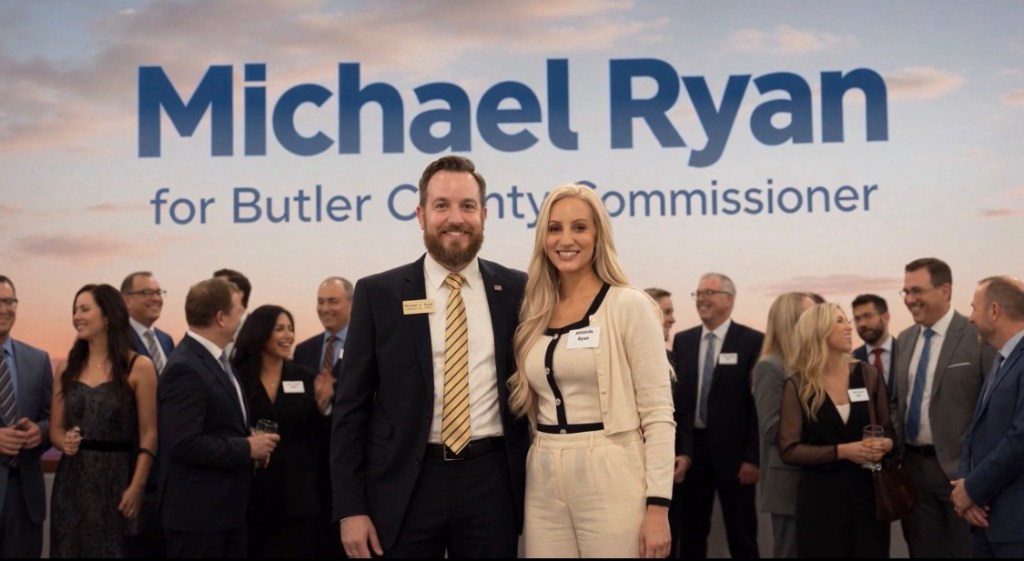
 The Overmanwarrior